Securing the Autonomous Edge and the Future of Machine Identity
The Operational Deadlock of Traditional Zero Trust
Modern industrial and enterprise environments are reaching a critical impasse. As organizations integrate smart building systems, IoT sensors, and autonomous hardware into their core infrastructure, the security models of the past decade are proving insufficient. The traditional approach to Zero Trust—focused heavily on human users and mobile devices—often falls apart when applied to the operational technology (OT) and smart systems that power the modern physical world.
The problem is two-fold: complexity and disruption. Most Zero Trust Network Access (ZTNA) solutions require invasive agents or complex re-architecting of existing networks. For a CISO or an OT engineer, the risk of a security upgrade causing a production outage or a smart building system failure is often deemed greater than the risk of the security gap itself. This has led to the persistence of "implicit trust" zones—areas of the network where hardware is allowed to communicate freely because the tools to secure them are too cumbersome to deploy.
Furthermore, the rise of non-human workloads—autonomous agents and automated processes that access databases and APIs—has expanded the attack surface beyond what static credentials can protect. To bridge this gap, organizations need a security paradigm that provides continuous, adaptive trust without requiring a complete overhaul of their operational workflows.
Conflux and the Meta Air Gap
VeilNet addresses this foundational challenge through Conflux, a secure post-quantum network connector designed to establish identity-authenticated mesh networking. Unlike traditional VPNs or legacy ZTNA tools that rely on fragile perimeters, Conflux creates what we define as a "meta air gap."
This meta air gap allows organizations to maintain the connectivity required for modern operations while achieving the security isolation of a physically disconnected network. Conflux operates at the network layer, providing quantum-resistant packet routing that ensures data remains encrypted against even the most advanced future threats.
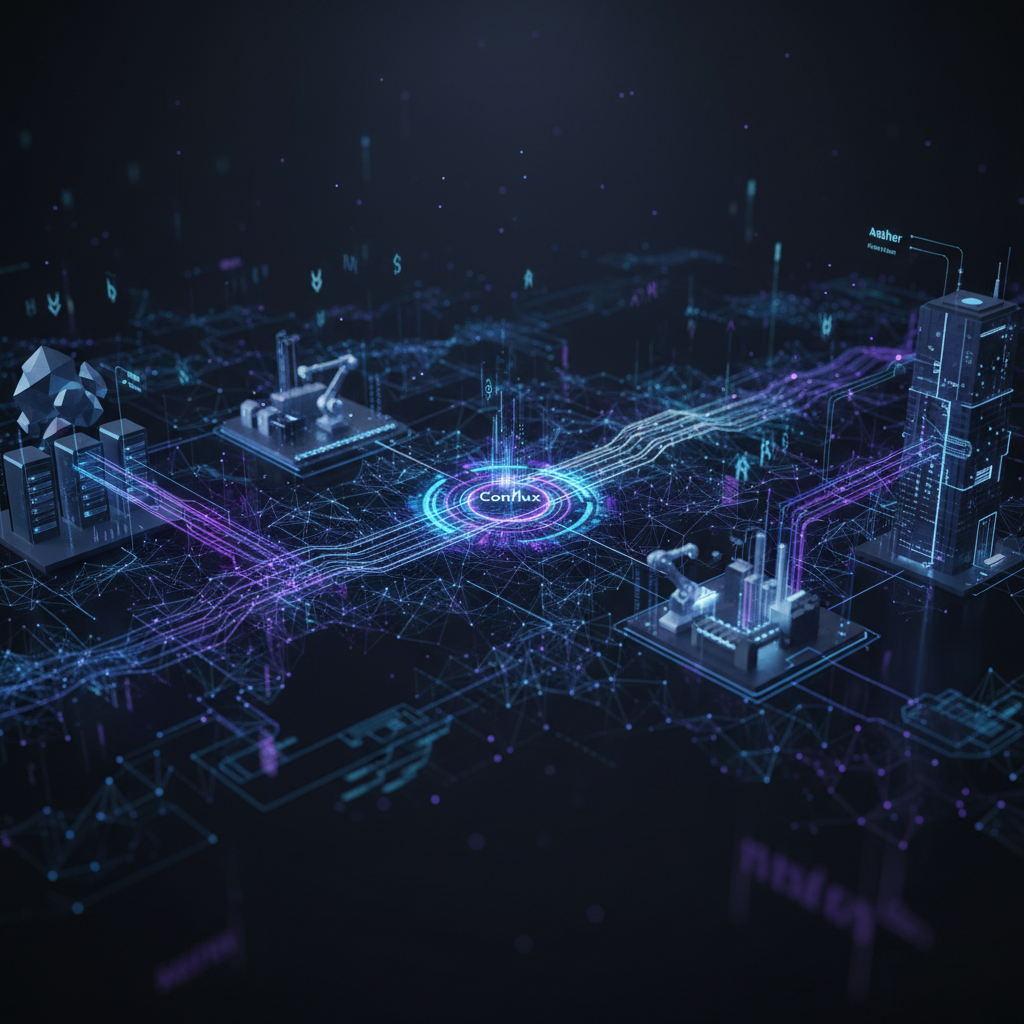
The core of the Conflux philosophy is that identity is the new perimeter. Every node in the network—whether it is a server in a cloud data center, a smart thermostat in a high-rise, or a robotic arm on a factory floor—is assigned a unique, cryptographically verified identity. This removes the reliance on IP addresses, which are easily spoofed, and replaces it with a robust, identity-centric routing fabric. By moving the security boundary to the individual connection, Conflux eliminates the possibility of lateral movement, ensuring that a compromise in one smart system does not lead to a breach of the entire enterprise network.
Aether and the Industrial Data Plane
While Conflux handles the secure plumbing of the network, Aether provides the intelligence and integration required for industrial-scale data operations. Aether is VeilNet's real-time engine, designed to act as the industrial data plane that sits above the Conflux network layer.
For OT engineers, the challenge is often the sheer variety of protocols and data formats involved in smart building and industrial systems. Aether solves this by providing native support for OPC UA, RESTful APIs, and Model Context Protocol (MCP) integrations. This allows for a unified view of data across disparate systems without exposing the underlying hardware to the open internet.
By leveraging Aether, organizations can implement continuous adaptive trust. Access decisions are not made once at the start of a session; they are continuously evaluated based on the data flow and the health of the connected device. If an OPC UA server begins exhibiting anomalous behavior, Aether, working in tandem with the Conflux mesh, can automatically throttle or sever the connection, isolating the potential threat in real-time.
Bridging the Gap Between IT and OT
One of the primary friction points in securing smart building systems and connected hardware is the cultural and technical divide between Information Technology (IT) and Operational Technology (OT). IT teams prioritize data confidentiality and integrity, while OT teams prioritize availability and safety.
VeilNet’s architecture is built to satisfy both requirements. Conflux provides the high-level security and post-quantum encryption that CISOs demand, while Aether provides the protocol-aware, low-latency data handling that OT engineers need to maintain uptime.
Because VeilNet operates as a mesh network, it avoids the "hub-and-spoke" bottlenecks common in traditional security architectures. This means that smart systems can communicate with the edge or the cloud with minimal latency, ensuring that time-sensitive industrial processes are not disrupted by security overhead. The result is a system that allows for the deployment of Zero Trust principles without the operational friction that has historically stalled such initiatives.
Future Proofing Against the Quantum Threat
The transition to Zero Trust is not just a response to today’s attackers; it is a necessary preparation for the quantum era. Many of the encryption standards currently used to secure smart hardware and enterprise networks are vulnerable to "harvest now, decrypt later" attacks, where adversaries collect encrypted data today with the intent of decrypting it once quantum computers become sufficiently powerful.
VeilNet integrates post-quantum cryptography at the core of the Conflux network connector. By securing the identity-authenticated mesh with quantum-resistant algorithms, VeilNet ensures that the long-term integrity of industrial data and smart building controls is preserved. This level of foresight is critical for infrastructure with long lifecycles, such as power grids, water systems, and large-scale commercial real estate, where hardware may remain in place for decades.
Implementing Zero Trust Without Disruption
The path to a resilient network does not require a "rip and replace" strategy. VeilNet is designed to be layered onto existing infrastructure, providing an immediate security uplift for smart systems and connected hardware.
By starting with Conflux to establish secure, identity-based tunnels for critical traffic, organizations can immediately close the most glaring gaps in their perimeter. As the deployment matures, Aether can be utilized to gain deeper visibility into the data plane, allowing for granular control over OPC UA and API traffic.
This phased approach allows for the continuous verification of users, devices, and non-human workloads without the risk of operational downtime. It transforms security from a barrier into an enabler, allowing organizations to embrace the benefits of the autonomous edge and agentic AI with the confidence that their foundational network is secure, authenticated, and ready for the challenges of the post-quantum world.
The VeilNet Advantage
As the Zero Trust market continues to expand, the distinction between general-purpose ZTNA and specialized, industrial-grade security becomes increasingly important. VeilNet stands alone in its ability to provide a comprehensive solution that addresses both the networking and the data plane requirements of modern infrastructure.
Through the combination of Conflux’s identity-authenticated mesh and Aether’s real-time integration engine, VeilNet provides a robust framework for securing the complex web of non-human workloads and smart devices that define the modern enterprise. We are not just securing connections; we are building a foundation for a more resilient, transparent, and secure industrial future.
The shift toward autonomous systems and smart hardware is inevitable. The security gaps that accompany this shift, however, are not. By adopting a post-quantum, zero-trust architecture today, organizations can ensure that they are prepared for the threats of tomorrow while maintaining the operational excellence required for today.
Securing Smart Building Operational Technology Against Lateral Movement
Protect operational technology and smart building networks from lateral movement with VeilNet's post-quantum zero-trust Conflux and Aether engines.
Securing Critical Water Infrastructure Against Operational Technology Lateral Exploits
Protect municipal water infrastructure from OT attacks. Learn how VeilNet Conflux and Aether secure vulnerable PLCs with post-quantum zero-trust networking.