Overcoming the Zero Trust Reality Check in AI Deployments
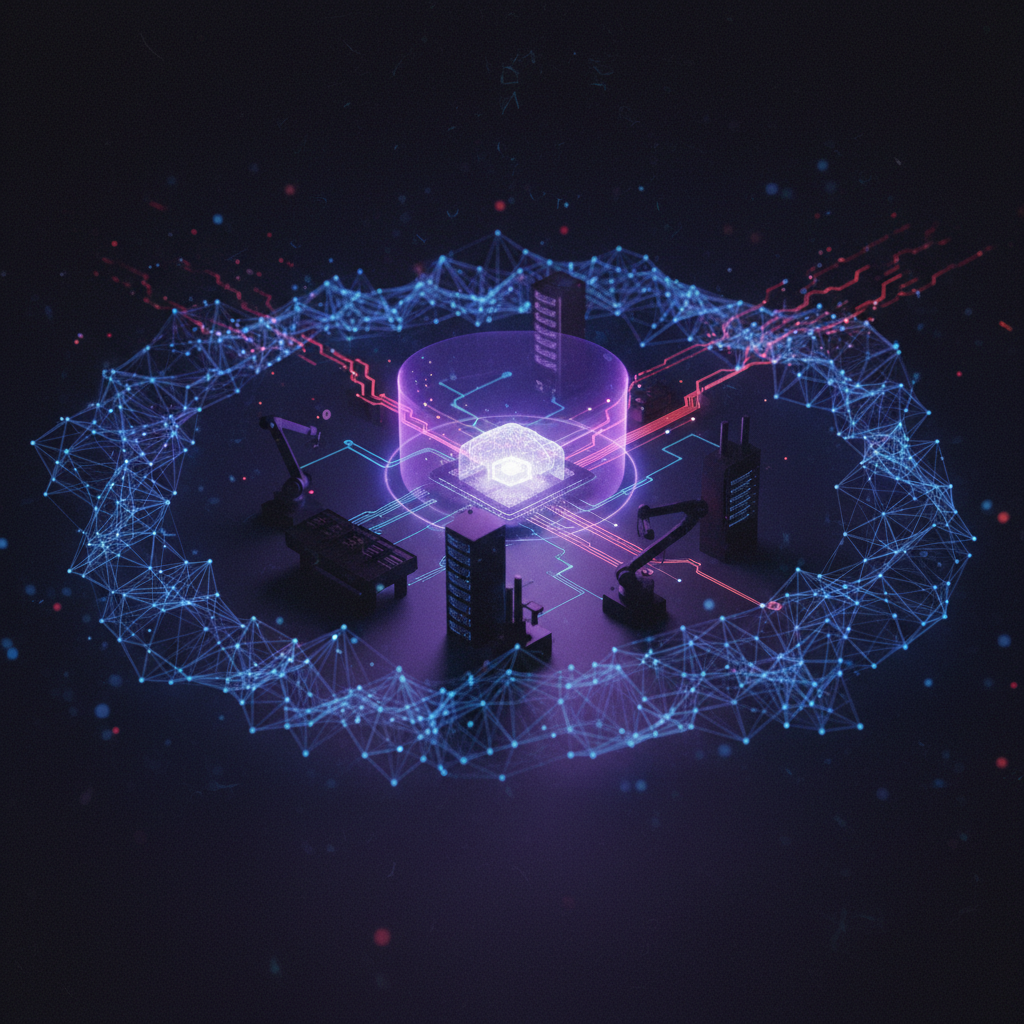
The Invisible Perimeter and the AI Security Paradox
The modern enterprise is currently caught in a high-stakes race between the rapid deployment of artificial intelligence and the fundamental limitations of traditional network security. As organizations rush to integrate large language models (LLMs) and autonomous agents into their core business processes, they are discovering a hard truth: the connectivity infrastructure that served the cloud era is dangerously inadequate for the AI era.
The problem is one of visibility and excessive trust. In most current AI deployments, any application with API access can often reach the model or the underlying data storage from anywhere within a corporate network. Even when protected by standard private endpoints, the security remains perimeter-based. Once a single endpoint is compromised, the "blast radius" includes every piece of sensitive data or operational technology (OT) the AI has been granted permission to access. This isn't just a hypothetical threat; it is a reality check for every CISO and OT engineer tasked with bridging the gap between raw data and actionable intelligence.
The traditional approach of using Virtual Private Networks (VPNs) or simple private IP tunneling fails because it grants broad access to internal systems upon connection. For AI to be truly secure, the network must move beyond the "connect and trust" model to an architecture where identity is verified continuously, and data paths are logically isolated through a post-quantum meta air gap. This is where the convergence of VeilNet’s Conflux and Aether platforms becomes the critical foundation for the next generation of secure industrial AI.
Establishing the Quantum Resistant Foundation with Conflux
The first step in securing AI infrastructure is solving the underlying networking problem. Traditional networking relies on IP addresses as identifiers, but in a zero-trust environment, an IP address is nothing more than a temporary location. VeilNet Conflux shifts the paradigm from IP-based routing to identity-authenticated mesh networking.
In a Conflux-powered environment, every node—whether it is an AI inference server in the cloud or an edge gateway on a factory floor—must be explicitly authenticated by its identity before a single packet can be routed. This creates a mesh network that is inherently invisible to the public internet and resilient against lateral movement. If a device is not part of the mesh, it simply does not exist from a networking perspective.
Furthermore, Conflux introduces the "meta air gap." Unlike a physical air gap, which is often bypassed by "sneakernet" or unauthorized bridges, the meta air gap is a logical isolation layer that provides the same level of security without sacrificing the real-time connectivity required by modern AI. By using quantum-resistant packet routing, Conflux ensures that the data being fed into AI models is protected against both current threats and the future threat of "harvest now, decrypt later" attacks. As quantum computing advances, the sensitivity of AI training data—often containing the literal "crown jewels" of a company’s intellectual property—demands this level of post-quantum protection today.
Bridging the Industrial Data Plane with Aether
While Conflux provides the secure tunnel, the AI needs a way to safely consume and interact with data. This is where VeilNet Aether functions as the industrial data plane. AI is only as useful as the data it can access, and for industrial enterprises, that data lives in highly specialized environments.
Aether acts as the real-time engine that handles the heavy lifting of data integration. It natively supports OPC UA, the backbone of industrial automation, along with RESTful APIs. This allows Aether to ingest telemetry from shop floor sensors, PLC controllers, and historical databases, and present it to AI models in a structured, secure format.
Crucially, Aether does not just pipe raw data; it enforces a zero-trust model at the data layer. It ensures that the AI only sees what it is authorized to see, providing a granular level of control that traditional middleware cannot match. By operating above the Conflux network layer, Aether provides a seamless experience where the AI can query industrial assets as if they were local resources, even if those assets are across the globe behind multiple layers of NAT and firewalls.
Securely Integrating Models via MCP
The most recent and significant advancement in AI infrastructure is the Model Context Protocol (MCP). As AI moves from being a simple chatbot to an agent capable of taking actions—such as adjusting a cooling system or rerouting a supply chain—it needs a secure way to interface with external tools and data sources.
VeilNet Aether’s MCP integration provides the secure "handshake" between the LLM and the physical world. Instead of allowing an AI model to have unfettered access to a toolset, Aether uses MCP to act as a secure proxy. The AI model requests information or an action through the protocol, and Aether validates that request against the enterprise’s zero-trust policies before executing it via the authenticated Conflux mesh.
This architecture solves the "prompt injection" and "misconfigured agent" risks that keep CISOs up at night. If an AI agent is compromised or behaves unexpectedly, its access is restricted to the specific, identity-verified tools exposed through Aether. It cannot scan the network, it cannot probe for vulnerabilities, and it cannot access data that hasn't been explicitly mapped to its identity.
Moving Beyond the VPN to a Post VPN World
The shift toward zero-trust networking is often framed as a replacement for the VPN, but in the context of AI and OT, it is more than that—it is a total reimagining of how systems communicate. In a post-VPN world, we no longer care about "being on the network." We care about the authenticated relationship between a user, a model, and a data source.
When an OT engineer uses an AI-powered diagnostic tool to analyze a turbine’s performance, they aren't "logging into a network." They are participating in a secure session where Conflux has established a quantum-resistant path and Aether has translated the turbine’s OPC UA data into a context the AI can understand. The entire process is transparent, real-time, and, most importantly, secure by design.
This convergence eliminates the need for security exceptions. Many organizations currently weaken their defenses by creating "temporary" bypasses for AI pilots or vendor access. These exceptions often become permanent vulnerabilities. With VeilNet, the security is baked into the connectivity itself. There are no exceptions because the system is designed to handle the complexity of modern industrial AI from the start.
Real Time Intelligence Without Compromise
The reality check for the industry is that the perimeter is dead, and the speed of AI development cannot be used as an excuse for poor security. Organizations that attempt to build AI on top of legacy networking will find themselves constantly firefighting breaches and configuration errors.
By leveraging Conflux for identity-authenticated mesh networking and Aether for a real-time industrial data plane, enterprises can finally deploy AI with confidence. This architecture provides the meta air gap required for high-security environments while maintaining the low-latency performance required for real-time industrial applications.
The future of the enterprise is autonomous, intelligent, and interconnected. But that future can only be sustained if it is built on a foundation that assumes breach, verifies identity, and protects data with post-quantum resilience. VeilNet provides that foundation, allowing CISOs and OT engineers to move from the "department of no" to the architects of a secure, AI-driven future.
Zero-Click Exploits Expose the Fatal Flaws of Traditional Network Boundaries
Discover how silent zero-click exploits bypass traditional ZTNA and how a post-quantum meta air gap blocks unauthorized network access and lateral movement.
Maintaining Zero Trust Security in Contested and Disconnected Environments
How to maintain zero trust security in contested, offline environments using decentralized post-quantum mesh networking and secure industrial data planes.