Bridging the Air Gap with Identity Centric Post Quantum Mesh Networking
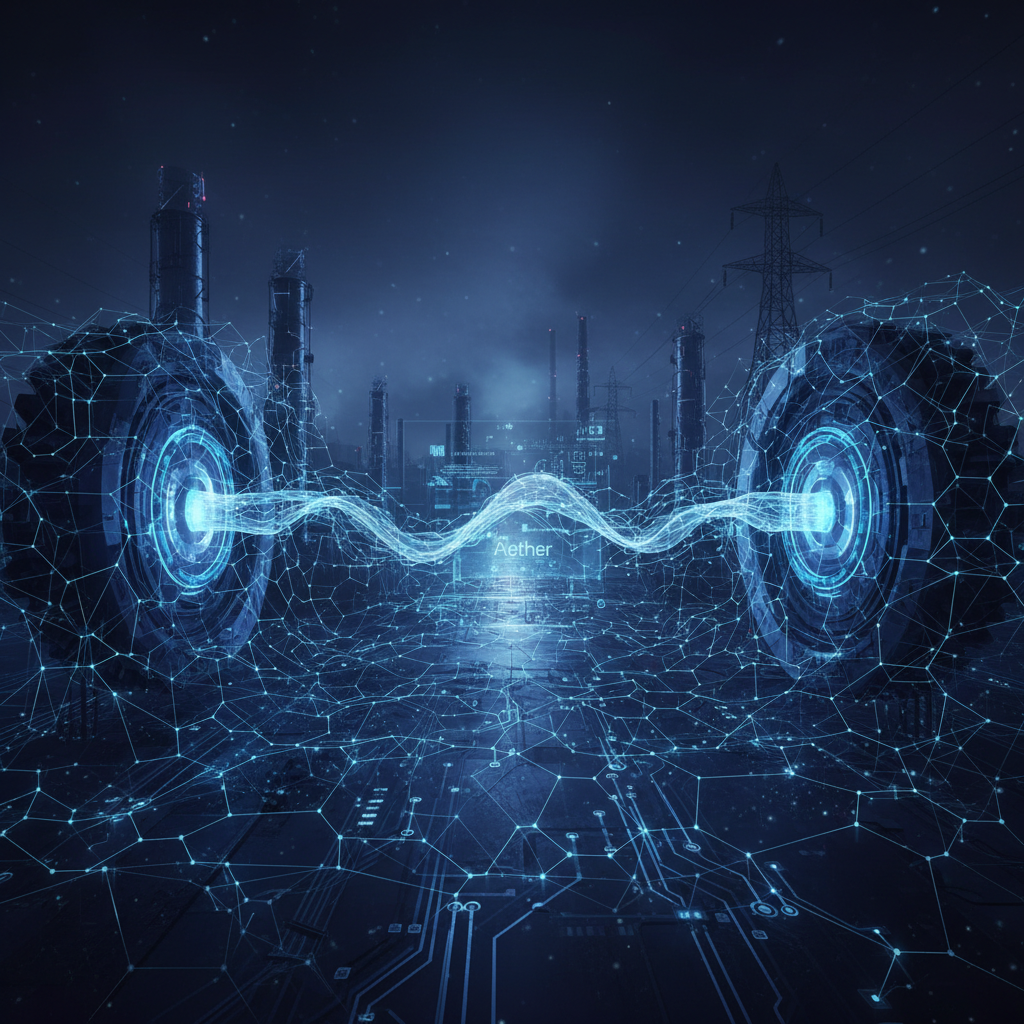
The industrial landscape is currently navigating a period of unprecedented transformation. For decades, the mantra of Operational Technology (OT) was simple: isolation is security. This concept, often referred to as the air gap, suggested that as long as critical infrastructure—power grids, manufacturing lines, and water treatment facilities—remained disconnected from the public internet, they were inherently safe. However, the modern reality of digital transformation has shattered this illusion. The convergence of IT and OT networks is no longer a choice but a business necessity, yet this interconnectivity has exposed a massive surface of legacy constraints and growing attack surfaces.
When critical systems become increasingly interconnected, digitally monitored, and remotely operated, the traditional perimeter defense model fails. Cyber risks multiply as threat actors seek entry points into both IT and OT networks, often exploiting improperly secured pathways that bridge these two worlds. In this environment, the legacy of the air gap must be replaced by a modern architecture that assumes the breach has already occurred and ensures that no packet, user, or device is trusted without explicit, continuous verification. This is the foundation of VeilNet.
The Challenge of Legacy OT Constraints
Operational technology environments are notoriously difficult to secure. Unlike IT environments where hardware cycles occur every three to five years, OT assets—such as Programmable Logic Controllers (PLCs) and Supervisory Control and Data Acquisition (SCADA) systems—often have lifespans of 20 years or more. These systems were frequently designed for reliability and uptime, not for defensive security in a hostile networking environment.
Many of these legacy systems rely on protocols that lack basic authentication or encryption. When these systems are connected to the corporate network to facilitate data-driven decision-making, they become low-hanging fruit for attackers. A breach in the IT environment can quickly migrate laterally into the production floor, leading to catastrophic physical outcomes. The challenge for today’s CISOs and OT engineers is to implement a Zero Trust framework that provides modern security without disrupting the fragile stability of legacy hardware.
Conflux: Re-engineering the Network Layer for Post-Quantum Security
At the heart of the VeilNet solution is Conflux, the post-quantum network connector designed to handle identity-authenticated mesh networking and provide what we call the "meta air gap." While traditional Virtual Private Networks (VPNs) and Software-Defined Perimeter (SDP) solutions provide a tunnel into the network, Conflux changes the nature of the network itself.
Identity-Authenticated Mesh Networking
In a Conflux-enabled environment, the network is not defined by IP addresses or subnets, but by cryptographic identity. Every node in the mesh must be explicitly authenticated before it can see or interact with any other node. This eliminates the possibility of lateral movement; even if an attacker gains access to a single device, they remain isolated within a segment of one.
Conflux utilizes a peer-to-peer mesh architecture. Unlike hub-and-spoke models where a central controller becomes a single point of failure and a primary target for attackers, Conflux allows endpoints to communicate directly. This decentralized approach increases resilience—a critical requirement for industrial settings where downtime is measured in thousands of dollars per minute.
The Meta Air Gap and Quantum Resilience
The "meta air gap" provided by Conflux creates logical isolation that rivals the security of a physical air gap without sacrificing connectivity. By wrapping legacy protocols in a quantum-resistant envelope, Conflux ensures that data remains secure not just against today’s threats, but also against the looming "Q-Day"—the point at which quantum computers become capable of breaking current encryption standards like RSA and ECC.
VeilNet integrates NIST-selected post-quantum algorithms directly into the Conflux routing layer. By utilizing CRYSTALS-Kyber for key encapsulation and CRYSTALS-Dilithium for digital signatures, VeilNet ensures that long-lived industrial data remains protected against harvest-now-decrypt-later attacks. This is not a bolt-on feature; it is a fundamental part of the packet routing process.
Aether: Bridging the Industrial Data Plane
While Conflux secures the transport layer, Aether operates at the application and data plane, providing the real-time engine necessary for industrial intelligence. Aether is the bridge between the raw signals of the factory floor and the sophisticated analysis of the modern enterprise.
OPC UA and Protocol Translation
Legacy OT environments speak a multitude of languages, with OPC UA being the gold standard for interoperability. Aether handles OPC UA integrations natively, allowing organizations to ingest data from diverse hardware sources without exposing those sources to the broader network.
By acting as a secure intermediary, Aether can pull telemetry from a Siemens or Rockwell PLC and translate it into a format usable by cloud-based analytics or local monitoring tools. This translation happens within the secure Conflux mesh, meaning the raw, unencrypted industrial protocols never touch an untrusted network segment.
RESTful API and MCP Integrations
In the era of AI and agentic workflows, data must be accessible to more than just human operators. Aether provides robust RESTful API support, enabling developers to build custom applications that interact with OT data safely. Furthermore, Aether’s support for the Model Context Protocol (MCP) allows for the integration of Large Language Models (LLMs) and AI agents into the industrial workflow.
Imagine an AI agent that can monitor vibration sensors on a turbine via Aether, cross-reference that data with maintenance logs, and automatically trigger a service request—all while operating within a zero-trust environment. Aether makes this "agentic workforce" possible by providing a secure, identity-authenticated data plane for non-human identities.
Moving Toward a Zero Trust OT Roadmap
Implementing Zero Trust in OT is not about replacing every piece of equipment on the floor. It is about implementing a layered strategy that prioritizes containment and visibility. As recent guidance from agencies like CISA suggests, the roadmap to OT security involves narrowing the gap between detection and containment.
VeilNet facilitates this roadmap through several key capabilities:
- Continuous Verification: Unlike static firewall rules, VeilNet requires continuous authentication. If a device’s posture changes or its identity is revoked, its access to the mesh is terminated instantly.
- Least Privilege Access: Through Aether and Conflux, engineers can define granular policies that ensure a technician or an application can only access the specific tags or data points required for their job.
- Visibility and Monitoring: By centralizing the data plane in Aether, organizations gain a unified view of their industrial data, making it easier to spot anomalies that might indicate a breach or a mechanical failure.
Conclusion: Security by Design, Not by Accident
The shift from "assume secure" to "assume breach" is the defining challenge of our decade. For OT environments, where the stakes involve physical safety and national infrastructure, the margin for error is zero. The legacy of the air gap is over, but the need for isolation remains.
VeilNet provides the tools to build a modern, resilient, and quantum-secure industrial network. Through the networking power of Conflux and the data intelligence of Aether, organizations can finally bridge the gap between IT and OT without compromising the security of either. By centering identity and embracing post-quantum cryptography today, we can ensure that the critical systems of tomorrow remain operational, authenticated, and invisible to those who would do them harm.
Breaking the Zero Trust Bottleneck for Industrial Data Exchange
Eliminate the industrial data bottleneck with VeilNet Conflux and Aether. Secure, post-quantum zero-trust networking for OT and IT cross-network data movement.
Bridging the Operational Technology Zero Trust Gap in Legacy Industrial Networks
Learn how VeilNet Conflux and Aether deliver quantum-resistant zero trust to legacy operational technology (OT) networks without costly hardware retrofits.