Breaking the Zero Trust Bottleneck for Industrial Data Exchange
The Hidden Crisis in Industrial Data Movement
As industrial environments undergo rapid digital transformation, a paradoxical crisis has emerged at the intersection of security and operations. The mandate for Zero Trust is no longer a theoretical debate; it is a regulatory and survival-driven requirement. Yet, for many organizations, the implementation of Zero Trust has become a significant bottleneck. Recent industry data suggests that over 80% of leadership teams view cross-network data sharing as their primary security risk, primarily because the methods used to move that data remain antiquated, manual, and inherently insecure.
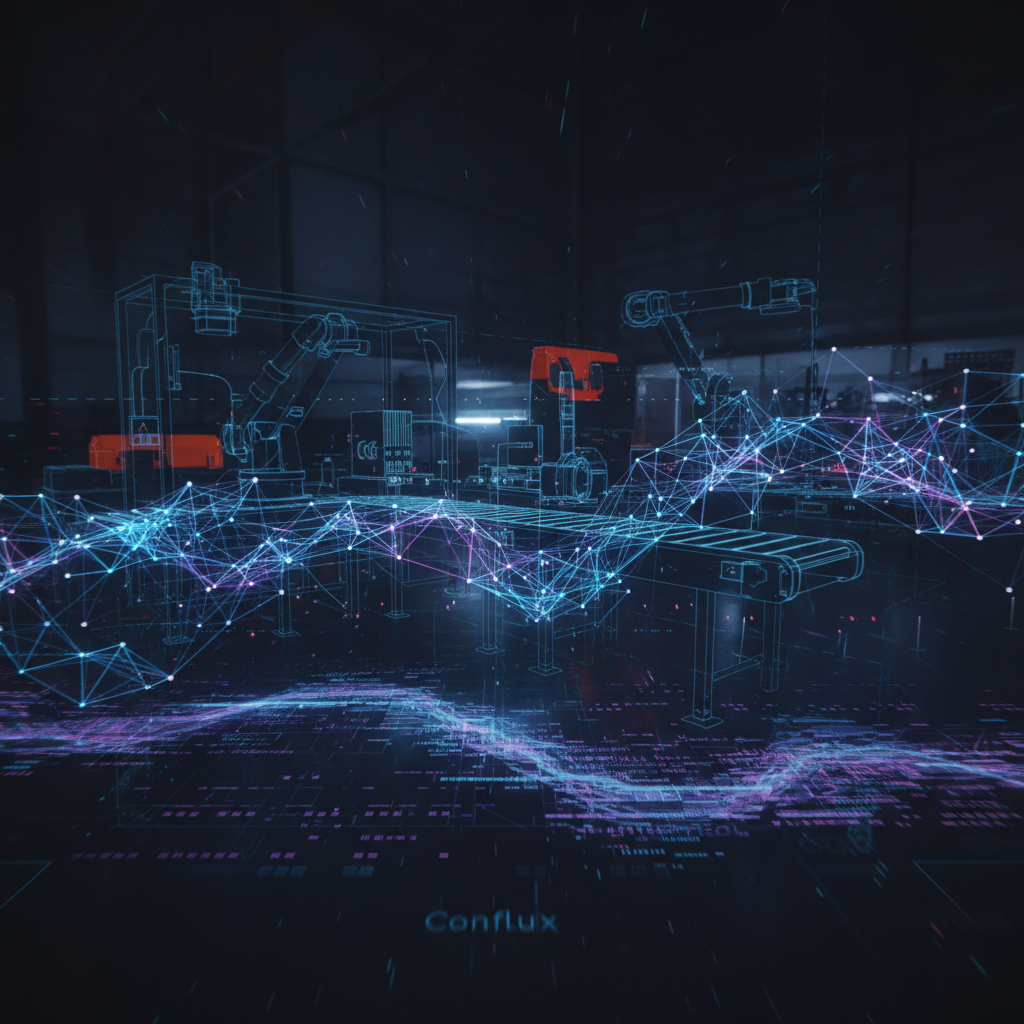
In the typical Operational Technology (OT) environment, the "department of no" often rules by necessity. To protect critical infrastructure—ranging from power grids to pharmaceutical manufacturing lines—security teams have traditionally relied on physical or logical air gaps. While effective at stopping threats, these gaps also stop the flow of data required for modern analytics, predictive maintenance, and AI-driven optimization. When data must move, it often travels via "sneakernet" (USB drives) or through complex, brittle VPN tunnels that lack the granular identity controls required for true Zero Trust.
The bottleneck isn't just a matter of speed; it is a matter of architectural failure. Traditional networking is built on the concept of IP addresses and perimeters. In a modern industrial context, where non-human identities, edge sensors, and remote cloud analytics must all talk to one another, the perimeter has dissolved. The solution is not to build higher walls, but to fundamentally rethink how connectivity is established and authenticated. This is where the synergy between VeilNet’s Conflux and Aether platforms redefines the possible.
Conflux and the Architecture of the Meta Air Gap
The first step in breaking the industrial data bottleneck is solving the networking problem. In a legacy environment, providing a remote vendor access to a specific PLC often requires opening a hole in a firewall that exposes an entire subnet. This "excessive trust" is the antithesis of Zero Trust.
VeilNet Conflux addresses this by establishing what we call a meta air gap. Conflux is a post-quantum zero-trust network connector that replaces traditional network routing with an identity-authenticated mesh. Instead of connecting networks to networks, Conflux connects identities to identities.
The technical foundation of Conflux is a peer-to-peer mesh network inspired by modern, high-performance protocols like WireGuard but enhanced for the post-quantum era. In a Conflux-enabled environment, every node—whether a ruggedized edge gateway in a factory or a workstation in a remote SOC—possesses a cryptographically verified identity. Connectivity is only established after mutual authentication, and once established, the traffic is encrypted using quantum-resistant packet routing.
This approach effectively creates a private, invisible overlay across the public internet or existing corporate infrastructure. Because the network is identity-based, an attacker scanning for open ports sees nothing. The "meta air gap" provides the security of being disconnected from the public internet while maintaining the high-speed, low-latency connectivity required for real-time operations. This eliminates the need for manual data transfers and clunky VPNs, removing the first major hurdle in the data movement bottleneck.
Aether and the Industrial Data Plane
Connectivity is only half of the equation. Once a secure path is established via Conflux, the challenge shifts to the data itself. Industrial environments are a patchwork of protocols, legacy standards, and proprietary formats. Moving data from a 20-year-old OPC UA server on a factory floor to a modern RESTful API or an AI agent requires more than just a "pipe"—it requires an engine that understands the context of the information.
VeilNet Aether serves as this engine. As the industrial data plane sitting atop the Conflux network layer, Aether provides the real-time translation and orchestration necessary for modern industrial applications. Aether allows organizations to treat their entire industrial footprint as a unified, programmable environment.
Aether’s primary strength lies in its native support for the protocols that drive modern industry. It handles the complexities of OPC UA, allowing engineers to map tags and telemetry directly into the data plane. For developers and data scientists, Aether provides clean RESTful API access to real-time industrial data, removing the need to write custom drivers for every piece of hardware on the floor. Furthermore, with the rise of the "agentic workforce" and AI-driven operations, Aether’s support for the Model Context Protocol (MCP) ensures that AI agents can interact with industrial systems safely and within the strict confines of a Zero Trust framework.
By integrating Aether directly with Conflux, VeilNet ensures that data doesn't just move securely—it moves intelligently. Aether can enforce data-level permissions, ensuring that an identity authenticated by Conflux only sees the specific data points it is authorized to access, rather than the entire data stream.
Securing the Non Human Identity
A critical but often overlooked gap in Zero Trust implementations is the management of non-human identities (NHIs). In an industrial setting, the majority of "users" are not people; they are sensors, PLCs, servers, and automated scripts. Traditional IAM (Identity and Access Management) solutions are designed for human logins, often relying on multi-factor authentication (MFA) that a machine cannot perform.
VeilNet bridges this gap by treating every component of the industrial stack as a first-class citizen in the identity registry. Through Conflux, machines are issued unique cryptographic identities that are verified continuously. There are no static passwords or shared keys to be stolen. If a device’s behavior deviates from the norm or its identity cannot be verified, Conflux instantly severs the connection at the network layer.
This focus on NHIs is essential for securing the "agentic workforce." As organizations deploy AI agents to monitor and optimize production, those agents must be authenticated and authorized with the same rigor as a human engineer. Aether and Conflux work in tandem to ensure these agents operate within a "least privilege" environment, where their access is restricted to the specific APIs and data tags required for their task.
Future Proofing Against the Quantum Threat
While many organizations are still struggling to implement basic Zero Trust principles, a new threat is emerging on the horizon: the advent of quantum computing. Current encryption standards, which protect everything from financial transactions to industrial secrets, are vulnerable to being broken by a sufficiently powerful quantum computer.
VeilNet has architected its platform with this "Harvest Now, Decrypt Later" threat in mind. Conflux utilizes quantum-resistant key encapsulation and packet routing protocols. This means that even if an adversary captures encrypted industrial traffic today, they will not be able to decrypt it in the future using quantum technology. For CISOs in charge of long-lifecycle infrastructure—such as utilities or heavy manufacturing—this post-quantum readiness is not a luxury; it is a requirement for protecting assets that will remain in service for decades.
From Bottleneck to Competitive Advantage
The transition from a perimeter-based security model to an identity-first, post-quantum Zero Trust architecture is the key to unlocking the true value of industrial data. By deploying Conflux and Aether, organizations can finally move past the "bottleneck" that has hindered digital transformation.
Security teams can move away from being the "department of no" because they finally have the tools to provide granular, authenticated, and invisible access to critical systems. Operations teams gain the real-time data access they need to drive efficiency, without compromising the integrity of the physical world.
The goal of Zero Trust should not be to stop the flow of data, but to ensure that data flows only to the right identity, at the right time, for the right reason. VeilNet’s Conflux provides the secure, post-quantum path, and Aether provides the industrial intelligence to make that data actionable. Together, they offer a definitive path forward for the modern enterprise, turning a security bottleneck into a sustainable competitive advantage.
Breaking the Zero Trust Bottleneck to Secure Industrial Data Movement
Learn how VeilNet Conflux and Aether solve the secure data movement bottleneck with meta air gaps and post-quantum zero trust networking for industrial OT.
Bridging the Air Gap with Identity Centric Post Quantum Mesh Networking
Discover how VeilNet Conflux and Aether secure legacy OT environments against quantum threats while enabling seamless IT-OT integration through zero trust.