Breaking the Zero Trust Bottleneck to Secure Industrial Data Movement
The promise of Zero Trust has always been absolute: verify every request, grant least-privileged access, and assume compromise. Yet, for many infrastructure architects and CISOs, a glaring paradox has emerged. While perimeter defenses are being dismantled in favor of identity-centric models, the actual movement of data between disparate networks has become a massive operational bottleneck. Recent industry data suggests that over 80% of leadership teams now view cross-network data sharing as their primary security risk, with more than half of all organizations still relying on manual, insecure methods to move critical information between trusted and untrusted zones.
This is the "Zero Trust Bottleneck." It occurs when the security architecture is so rigid that it prevents the business from functioning, or so porous—relying on legacy VPNs and "sneakernet" file transfers—that the Zero Trust label becomes a dangerous misnomer. For those operating in critical infrastructure, manufacturing, and complex OT environments, this bottleneck isn't just an IT hurdle; it is a threat to physical safety and operational continuity.
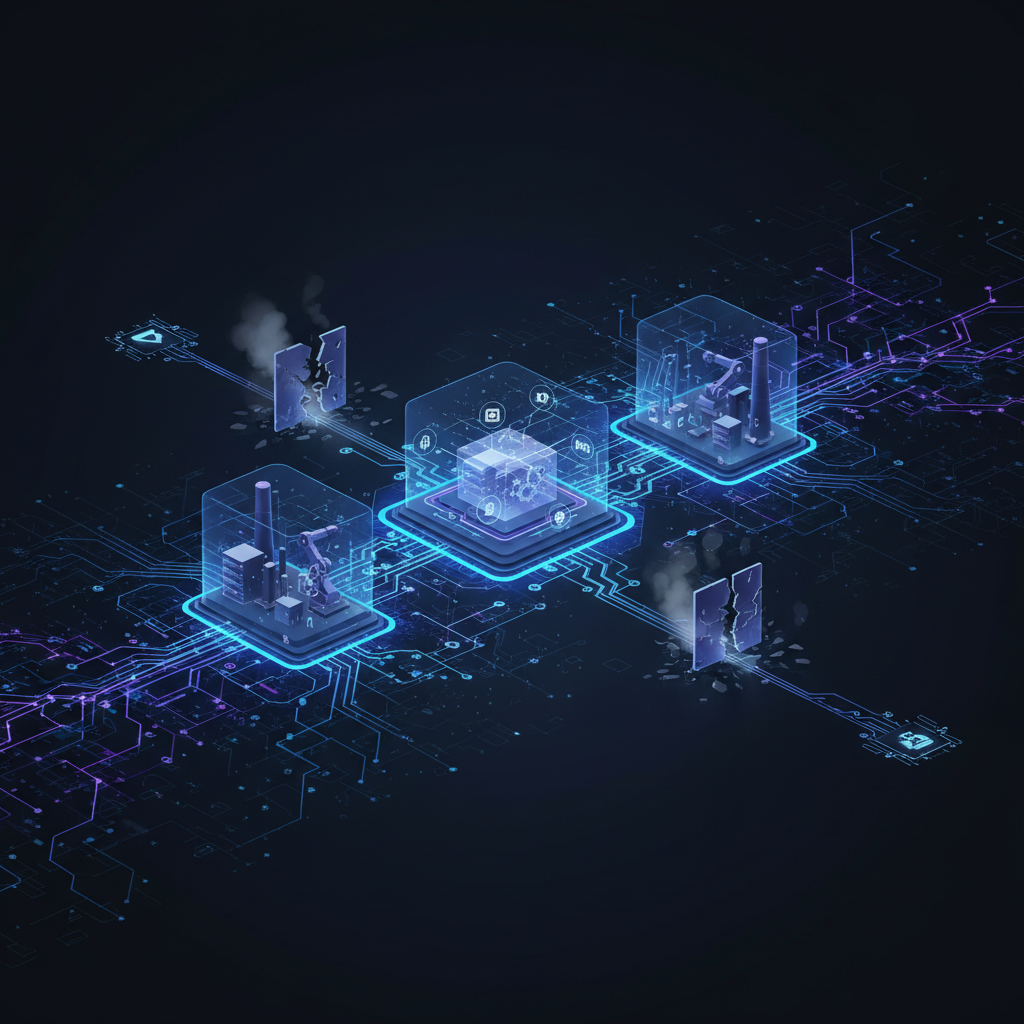
VeilNet was engineered to dissolve this bottleneck. By decoupling the network layer from the data plane and introducing a post-quantum "meta air gap," VeilNet provides a path for secure, real-time data movement that fulfills the Zero Trust promise without the traditional friction.
The Failure of Traditional Inter-Network Transfers
The current crisis in data movement stems from a fundamental mismatch between legacy networking and modern security requirements. Most organizations still attempt to bridge the gap between IT and OT, or between different cloud regions, using one of three flawed methods.
First is the traditional VPN. VPNs are inherently antithetical to Zero Trust; they provide a "pipe" that, once breached, often grants broad access to the destination network. They rely on static IP addresses and outdated encryption standards that are increasingly vulnerable to sophisticated nation-state actors.
Second is the physical air gap. While long considered the gold standard for security, the physical air gap is increasingly a myth. To update software, extract telemetry, or manage systems remotely, someone eventually plugs in a USB drive or connects a laptop. These manual transfers are the single greatest source of "living-off-the-land" attacks, where adversaries bypass the network entirely.
Third is the complex web of firewall rules and jump boxes. These systems are notoriously difficult to maintain, leading to configuration drift. In many cases, a rule created for a temporary maintenance window remains open for years, creating a permanent hole in the architecture.
Conflux: The Post-Quantum Networking Foundation
To solve the bottleneck, the network itself must be reimagined. VeilNet Conflux serves as the foundational secure network connector. It does not simply "connect" two points; it establishes an identity-authenticated mesh network that is cloud-agnostic and inherently quantum-resistant.
Conflux treats the network as a set of dynamic, authenticated identities rather than a collection of vulnerable IP addresses. When a packet moves through Conflux, it is routed through a decentralized mesh where every node must be cryptographically verified. This removes the "implicit trust" that plagues traditional wide-area networks.
Crucially, Conflux is built for the future. We are currently in an era of "Harvest Now, Decrypt Later," where adversaries intercept encrypted traffic with the intent of breaking it once quantum computers reach maturity. Conflux mitigates this risk by using post-quantum cryptographic primitives for every connection. By the time quantum computing is viable, the data moving through the Conflux layer will remain shielded, ensuring the long-term integrity of industrial secrets and infrastructure controls.
Aether: The Industrial Data Plane
If Conflux is the secure pipe, VeilNet Aether is the intelligent engine that sits above it. In industrial environments, the bottleneck is often caused by protocol incompatibility. OT systems speak languages like OPC UA, while modern IT and AI systems speak RESTful APIs or use the Model Context Protocol (MCP).
Aether bridges this divide by acting as a real-time data engine. It ingests industrial telemetry directly from the Conflux network and translates it into actionable formats. This allows for the secure movement of data from a PLC (Programmable Logic Controller) on a factory floor to a centralized analytics dashboard in the cloud without ever exposing the raw OT network to the public internet.
The integration of MCP (Model Context Protocol) within Aether is particularly significant for the modern enterprise. As organizations look to deploy AI agents and LLMs to monitor infrastructure, they face the risk of these agents having too much access. Aether provides the necessary guardrails, allowing AI models to "see" the data they need through a secure, mediated plane without granting them direct access to the underlying control systems.
Implementing the Meta Air Gap
The most transformative concept within the VeilNet ecosystem is the "meta air gap." Traditional air gaps fail because they are too restrictive to be practical. The meta air gap, powered by the synergy of Conflux and Aether, provides the same level of logical isolation as a physical gap but with the fluidity of a modern network.
Within a meta air gap, there is no direct IP-to-IP path between the source and the destination. Instead, data is brokered through the identity-authenticated mesh. A user or system on the outside can request a specific piece of data, and if—and only if—their identity is verified and their permissions are current, the Aether engine will fetch and deliver that specific packet of information.
This approach eliminates the need for manual transfers and the risk of lateral movement. An attacker who compromises a workstation on the IT side finds no route to the OT side because there is no "network" to scan. There are only cryptographically signed identities and specific, brokered data paths.
Solving the Human Factor in Data Movement
The data highlighting that 53% of organizations rely on manual transfers points to a human problem as much as a technical one. When security is too difficult, employees find workarounds. Manual file transfers via external drives or personal cloud storage are the ultimate "Zero Trust gaps."
VeilNet closes these gaps by making secure movement easier than the workaround. Because Conflux is cloud-agnostic and runs on existing hardware, it can be deployed across global infrastructure to create a unified, secure fabric. Engineers no longer need to worry about the complexities of setting up a new VPN or requesting a firewall change; they simply authenticate their device, and the Conflux mesh handles the secure routing of their Aether data streams.
This "invisible" security is what allows the IT-OT convergence to actually succeed. It empowers the CISO to say "yes" to new data initiatives because the underlying infrastructure is inherently secure and future-proof.
The Path Forward for Infrastructure Architects
Breaking the Zero Trust bottleneck requires moving beyond the "perimeter" mindset that has dominated cybersecurity for three decades. The goal is no longer to build a bigger wall, but to ensure that the movement of every individual bit of data is authenticated, encrypted against future threats, and routed through a logical air gap.
By leveraging Conflux for the network layer and Aether for the data plane, organizations can finally move away from the high-risk manual processes that currently define cross-network sharing. They can embrace the efficiency of real-time telemetry and the power of AI-driven monitoring while maintaining a posture that assumes compromise and yields nothing to the adversary.
The bottleneck is not inevitable. It is a symptom of legacy thinking. With a post-quantum, identity-first approach, the movement of data becomes what it should always have been: a seamless, secure, and silent enabler of modern industrial progress.
Defeating the Security Risks of Autonomous AI Agents with Post Quantum Zero Trust
Learn how VeilNet secures the autonomous enterprise against AI agent risks using Conflux post-quantum networking and Aether data plane orchestration.
Breaking the Zero Trust Bottleneck for Industrial Data Exchange
Eliminate the industrial data bottleneck with VeilNet Conflux and Aether. Secure, post-quantum zero-trust networking for OT and IT cross-network data movement.