Defeating the Security Risks of Autonomous AI Agents with Post Quantum Zero Trust
The Looming Crisis of Autonomous Agency
The enterprise landscape is undergoing a silent but fundamental shift. The traditional model of networking, designed for human users accessing static applications, is being overrun by a new class of entity: the autonomous AI agent. Projections indicate that within the next few years, over a billion AI agents will be in circulation, acting across business systems, accessing corporate data, and executing tasks with minimal human oversight.
For the CISO and the OT engineer, this represents a security paradox of unprecedented proportions. These agents are not mere scripts; they are dynamic, non-human identities that require deep access to both cloud-native RESTful APIs and sensitive industrial data via OPC UA. In the hands of an adversary, or even through a simple misconfiguration, a "wandering agent" becomes the ultimate vehicle for lateral movement.
The core problem is that current security architectures are built on a foundation of implicit trust. Even modern Zero Trust Network Access (ZTNA) implementations often rely on legacy VPN tunnels or centralized gateways that leave ports open and IP addresses visible. When an AI agent is granted access to a network segment, it often inherits the broad permissions of its host, allowing it to pivot from a benign data-gathering task to sensitive infrastructure control. To secure the autonomous enterprise, we must move beyond simple authentication and embrace a networking model that is invisible, cryptographically proven, and resistant to the threats of the future.
The Failure of the Invisible Perimeter
Legacy security models operate on the assumption of a "secure" interior and a "hostile" exterior. However, in an environment saturated with AI agents and distributed OT sensors, the perimeter has not just moved—it has dissolved. When an AI agent connects to a clinical network in a healthcare setting or a PLC on a factory floor, it often does so over standard TCP/IP stacks that were never designed for zero-trust environments.
Most ZTNA solutions still allow an endpoint to have a presence on the network before it is authenticated. This visibility is exactly what an advanced threat or an errant agent needs to begin its reconnaissance. If a device has a public IP address or a listening port, it is an attack surface.
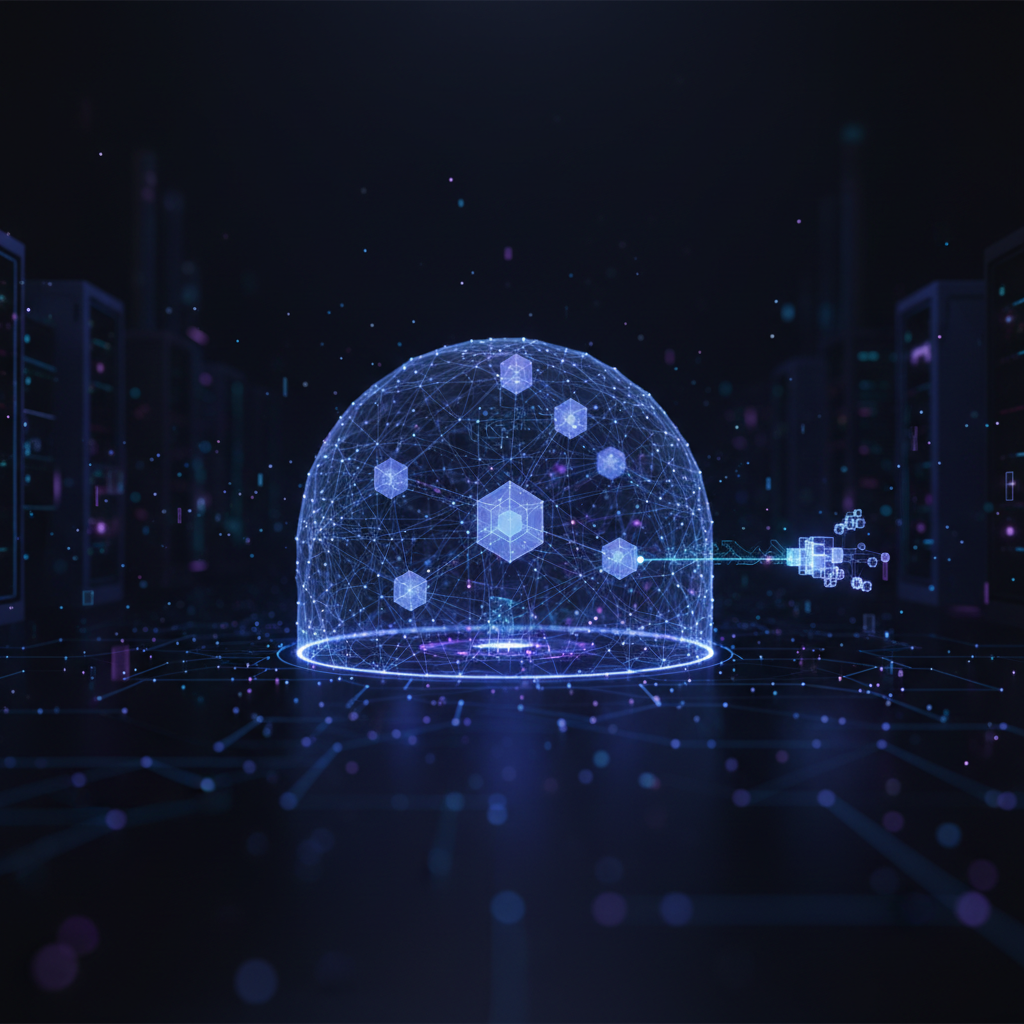
This is the vulnerability that necessitates a shift toward a "Meta Air Gap." The goal is to ensure that no device is ever visible to the public internet or even to other devices on the same physical network until a mutual, cryptographic identity has been established. This is where the foundation of the VeilNet platform begins.
Conflux and the Foundation of Post Quantum Networking
To address the risks posed by autonomous machines and AI agents, the network layer itself must be reinvented. VeilNet’s Conflux serves as this secure, post-quantum network connector. Unlike traditional networking tools that rely on fragile certificate authorities or vulnerable VPN concentrators, Conflux establishes an identity-authenticated mesh network where every node is invisible to the world until it is cryptographically authorized.
The technical brilliance of Conflux lies in its use of Post-Quantum Cryptography (PQC). As we approach the era of quantum computing, the standard RSA and Elliptic Curve algorithms that currently protect our data will become obsolete. Adversaries are already engaging in "Harvest Now, Decrypt Later" attacks, capturing encrypted traffic today with the intention of breaking it once quantum hardware matures.
Conflux mitigates this by utilizing NIST-approved quantum-resistant algorithms, such as ML-KEM and ML-DSA, for its handshakes and packet routing. This ensures that the identity of every AI agent and every industrial sensor is protected not just against today’s threats, but against the computational power of tomorrow.
Furthermore, Conflux eliminates the concept of a central "hub." It is a true peer-to-peer mesh. When an AI agent needs to communicate with an industrial controller, Conflux creates a direct, authenticated path. There are no listening ports and no public IP addresses assigned to the protected endpoints. This creates the Meta Air Gap: to the rest of the world, your infrastructure simply does not exist.
Aether: The Industrial Data Plane for the AI Era
While Conflux handles the secure transport and identity of the network, the challenge of data integration remains. AI agents do not just need a "pipe"; they need to understand and interact with diverse data formats, ranging from cloud-based microservices to legacy industrial protocols.
This is the role of Aether, VeilNet’s real-time engine. Aether sits above the Conflux network layer, providing the industrial data plane required for modern automation. It is specifically designed to handle the three pillars of modern connectivity: OPC UA for industrial environments, RESTful APIs for software integration, and the Model Context Protocol (MCP) for AI agent orchestration.
The integration of MCP is particularly critical. As AI agents become more prevalent, they need a standardized way to access context from their environment without requiring full, unrestricted access to the underlying databases. Aether acts as the secure mediator. It allows an AI agent to request specific data points—such as the vibration levels of a turbine via OPC UA—without ever exposing the turbine's control interface to the agent.
By sandboxing agentic loops through pre-defined resource limits and secure service bindings, Aether prevents the "wandering agent" scenario. Access is never open by default. Every data request is checked against a granular zero-trust policy that considers the agent’s identity, its current task, and the health of the underlying Conflux connection.
Orchestrating Trust in a Non-Human World
The combination of Conflux and Aether solves the "identity crisis" of the autonomous enterprise. In a traditional network, identities are often tied to users. In the VeilNet ecosystem, identity is tied to the cryptographic fingerprint of the node itself.
When a new device or agent joins the network, Conflux performs a multi-factor identity verification that goes beyond simple credentials. It validates the device's hardware signature and its cryptographic keys before allowing a single packet to flow. Once the connection is established, Aether takes over the data orchestration, ensuring that the information flowing through that secure tunnel is strictly limited to what is necessary for the task at hand.
This provides a level of containment that is impossible with traditional firewalls. If an AI agent were to be compromised, its reach would be limited to the specific service bindings defined in Aether and the specific peer-to-peer routes established in Conflux. It cannot scan the network for other targets because, in a Conflux mesh, there is no "local network" to scan. Every other device is invisible.
The Strategic Imperative for Post-Quantum Readiness
For CISOs, the move to a post-quantum zero-trust architecture is no longer a luxury—it is a strategic necessity. The Pentagon’s push toward zero-trust by 2027 and the rapid adoption of AI agents by the Fortune 500 signal a clear trend: the old ways of securing infrastructure are failing.
The threat of lateral movement is the primary driver of modern data breaches. By replacing implicit trust with continuous, post-quantum verification, VeilNet allows organizations to embrace the benefits of AI and autonomous agents without opening the door to catastrophic failure.
Whether you are securing a telehealth platform that requires remote access to protected health information or a manufacturing plant where AI agents optimize real-time production via OPC UA, the requirement is the same: the network must be invisible, the data must be segmented, and the cryptography must be future-proof.
Conclusion: Engineering a Resilient Future
The arrival of a billion AI agents represents one of the greatest productivity opportunities in history, but it also represents a significant expansion of the corporate attack surface. Securing this new frontier requires a departure from the "department of no" mentality and a move toward providing secure, reusable patterns for autonomous connectivity.
VeilNet’s Conflux and Aether provide the blueprint for this transition. By combining the "Meta Air Gap" and post-quantum routing of Conflux with the sophisticated data plane and MCP integration of Aether, enterprises can finally build a network that is as dynamic and intelligent as the agents running on it.
The goal of modern security design is containment and the assumption of failure. By ensuring that every connection is cryptographically proven and every data path is strictly mediated, VeilNet enables a world where we can finally trust the machines—because we have engineered a network that no longer requires trust at all.
Eliminating OT Downtime and Meeting the 2028 Quantum Deadline — Without Replacing Your Hardware
How VeilNet's self-healing PLC edge cloud and quantum-resistant network overlay protect Australian critical infrastructure from hardware failure and the ASD 2028 post-quantum deadline — with no changes to existing PLCs, SCADA, or OT protocols.
Breaking the Zero Trust Bottleneck to Secure Industrial Data Movement
Learn how VeilNet Conflux and Aether solve the secure data movement bottleneck with meta air gaps and post-quantum zero trust networking for industrial OT.