
Zero Trust for Contested and Disconnected Operational Technology
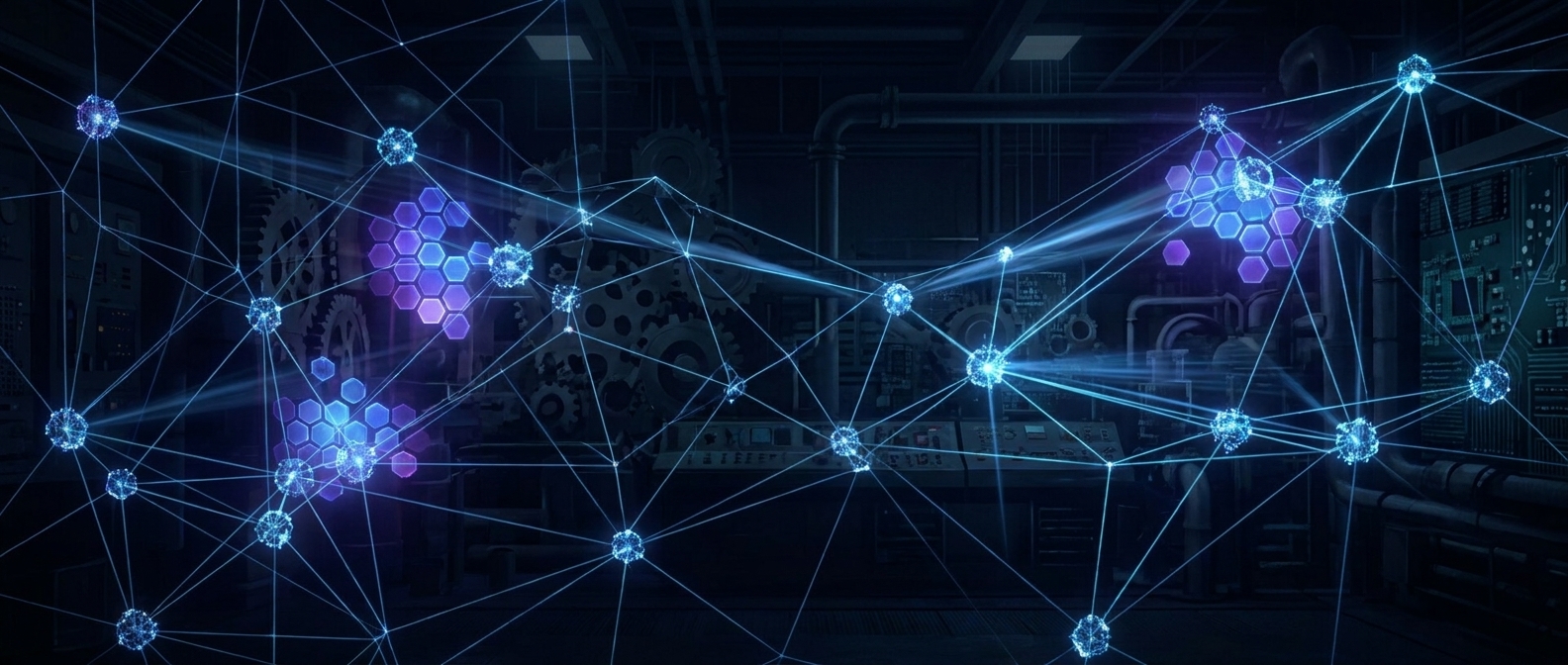
Traditional zero-trust architectures rely on a fatal assumption: continuous, high-bandwidth connectivity to a centralized cloud broker. Modern Zero Trust Network Access (ZTNA) solutions locate their Policy Decision Points (PDPs) in the cloud, requiring that every authentication and authorization decision traverse the wide area network (WAN). If an endpoint seeks to communicate with an asset, the session must be continuously validated by a remote service. This design works well for corporate offices with redundant fiber lines and predictable user behavior, but it creates a single point of failure for critical infrastructure and operational technology (OT) environments.
When an industrial facility or remote installation is isolated from the wider internet, this centralized architecture immediately collapses. WAN connections fail due to physical fiber cuts, severe weather, satellite link degradation, or targeted cyberattacks. In contested environments, electronic warfare and localized GPS jamming can instantly sever communication links. If a remote site cannot reach the cloud-based policy broker, local security systems are left blind, unable to verify cryptographic identities, update local firewall tables, or authorize new connections.
This disconnect forces infrastructure architects into an unacceptable dilemma during WAN outages. They must configure their local Policy Enforcement Points (PEPs) to either fail-open or fail-closed. Failing closed preserves security but halts critical operations, potentially shutting down water treatment plants, power grids, or automated manufacturing lines. Failing open keeps the facility running but completely dismantles the zero-trust architecture, leaving the local network exposed to lateral movement from any compromised device already inside the perimeter. In critical infrastructure, where operational uptime is tied directly to public safety, failing closed is rarely an option, forcing operators to accept massive security risks.
The security challenge is compounded by the nature of legacy operational technology. Industrial control systems (ICS) and supervisory control and data acquisition (SCADA) systems were never designed to defend themselves against modern threats. They lack the computational resources to run local zero-trust agents, handle complex modern identity verification, or support standard transport layer security. If the external security layer fails or goes offline, these legacy machines are left completely unprotected. Security teams require an architecture that enforces continuous zero-trust validation locally at the edge, ensuring protection persists even when WAN uplinks are entirely severed.
Decentralized Survivability with VeilNet Conflux
VeilNet solves the vulnerability of cloud-dependent ZTNA by decentralizing the zero-trust security architecture. Instead of routing authorization requests to a remote cloud broker, VeilNet shifts zero-trust decision-making directly to the local edge. This local survivability ensures that remote sites maintain a rigid security posture even when completely isolated from the wider network. The foundation of this decentralized security model is VeilNet Conflux.
Conflux establishes an identity-authenticated mesh network across local operational environments. Rather than relying on central directory services or cloud-hosted identity providers, Conflux nodes use peer-to-peer cryptographic validation. Every device on the local network is assigned a unique cryptographic identity. Nodes mutually authenticate each other at the packet level, ensuring that only verified assets can communicate. This mesh network operates autonomously and dynamically, requiring zero contact with external servers to establish, optimize, or maintain secure paths.
To protect communication paths in highly contested or high-risk environments, Conflux integrates quantum-resistant packet routing. Modern adversaries routinely capture encrypted network traffic with the intent of decrypting it once quantum computers mature. Conflux mitigates this "harvest now, decrypt later" threat by securing all local peer-to-peer packet routing with post-quantum cryptography. Every packet transmitted across the mesh is signed and encrypted using algorithms that withstand both classical and quantum cryptographic attacks, securing local communications for decades to come.
Furthermore, Conflux introduces the meta air gap to isolate critical operational systems. Traditional physical air gaps are routinely bypassed by USB drives or maintenance laptops, yet they remain popular because they prevent direct network exposure. Conflux's meta air gap provides a logical, cryptographically enforced alternative. It allows secure, bidirectional telemetry and control to cross security boundaries without exposing direct IP addresses or routing tables. Legacy systems remain isolated from broader networks, protected against external intrusion and lateral movement.
Securing the Industrial Data Plane with VeilNet Aether
While Conflux manages the secure, decentralized network layer, industrial environments require protection at the application and protocol levels. Operational technology relies on specialized communication protocols that standard ZTNA solutions cannot parse or protect. VeilNet addresses this challenge with Aether, the industrial data plane that sits directly above the Conflux network layer. Aether bridges the gap between secure network routing and the unique demands of industrial machines.
Aether provides native integration for key industrial protocols, including OPC UA, RESTful APIs, and MCP (Machine Control Protocol). In an isolated environment, legacy controllers must still exchange data with local human-machine interfaces (HMIs) and database historians. Aether intercepts these communications, translating and encapsulating them securely within the Conflux mesh. This prevents cleartext industrial protocols from traversing the physical network, shielding them from local sniffing, modification, and spoofing attacks.
Crucially, Aether enforces fine-grained, policy-based access control at the data layer. Standard network firewalls operate on an all-or-nothing model, but Aether parses the actual payloads of industrial protocols. It restricts communication to specific authorized commands, such as limiting a local terminal to read-only access on specific OPC UA tags. If a local workstation is compromised during a network isolation event, the attacker cannot send unauthorized write commands to PLC controllers. Aether ensures that even within an isolated mesh, every action is strictly scrutinized and controlled.
Zero Trust That Survives Isolation
Operational resilience requires a zero-trust model that does not break when the internet does. By combining Conflux's decentralized, peer-to-peer mesh with Aether's protocol-aware industrial data plane, VeilNet delivers true local survivability. Critical infrastructure facilities can withstand complete WAN outages, GPS jamming, and external cyberattacks without sacrificing security or uptime.
Security architects no longer have to choose between operational continuity and zero-trust protection. With VeilNet, the security architecture remains active, local, and absolute. Critical assets remain isolated behind a cryptographic meta air gap, and all communications are secured with quantum-resistant encryption. Even when severed from the rest of the world, your local operational technology is fully protected.
Surviving the Silent Zero Trust Failure Mode in Contested Operational Environments
Discover how cloud-dependent zero trust fails in contested industrial environments and how decentralized mesh networks restore post-quantum resilience.
Operationalizing Zero Trust in Industrial Control
Learn how VeilNet operationalizes zero trust in industrial control systems using Conflux's post-quantum mesh and Aether's real-time protocol data plane.