
Surviving the Silent Zero Trust Failure Mode in Contested Operational Environments
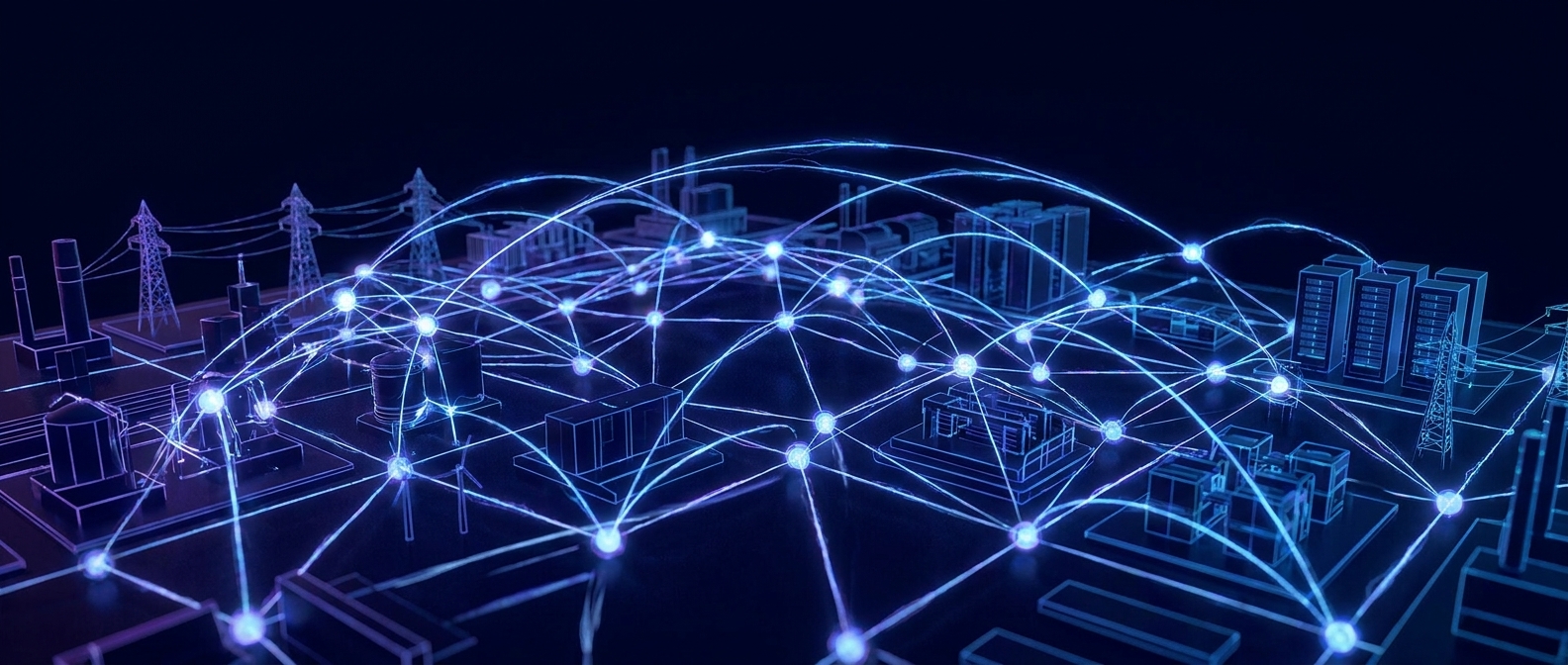
The centralized architecture of modern Zero Trust Network Access (ZTNA) contains a critical, unaddressed vulnerability: it assumes the network is always online. For enterprises operating in stable corporate offices, this assumption holds. But for critical infrastructure, remote industrial plants, and tactical operations, the assumption of continuous, high-bandwidth upstream connectivity is a dangerous liability. When physical incidents, regional outages, or cyberattacks sever the connection to cloud-hosted identity providers (IdPs) and centralized policy decision points (PDPs), traditional zero-trust architectures collapse.
In these contested and degraded environments, organizations face an impossible choice. They can fail-closed, shutting down critical systems because local nodes cannot verify authorization with a central cloud directory, or fail-open, disabling security controls and reverting to vulnerable legacy protocols to maintain operational continuity. Both outcomes represent a severe failure of resilience. A security architecture that requires a round-trip to a centralized cloud broker to validate a local machine-to-machine transaction is fundamentally unfit for high-consequence operational technology (OT) environments.
The root of this vulnerability lies in the coupling of identity verification with global WAN availability. In a typical ZTNA deployment, when a local edge server must communicate with an adjacent industrial gateway, both devices must authenticate through an external, cloud-based control plane. If physical transit lines are cut or GPS synchronization is jammed, local devices lose their trust state and cannot resolve domain names or fetch updated certificate revocation lists. This trust blackout freezes local operations, proving that traditional zero trust merely trades localized network vulnerabilities for global availability risks.
To survive in contested environments, critical infrastructure needs a zero-trust model built for localized autonomy. Security controls must operate independently of upstream cloud dependencies, ensuring that even if a facility is completely isolated from the wider internet, its internal communications remain fully encrypted and authenticated. This requires moving away from hub-and-spoke security brokers and adopting a decentralized, peer-to-peer networking architecture designed from the ground up for survivability.
Decentralizing the Zero Trust Boundary with Conflux Mesh Networking
VeilNet addresses this architectural vulnerability by eliminating centralized dependencies at the network layer. Rather than relying on cloud-based brokers to authorize connections, VeilNet establishes a highly resilient transport architecture directly within the local environment using Conflux. Conflux is engineered to handle identity-authenticated mesh networking, quantum-resistant packet routing, and the execution of a meta air gap, providing an autonomous network fabric that operates without upstream connectivity.
At the core of Conflux is identity-authenticated mesh networking where every node within the network is provisioned with a cryptographic, post-quantum identity. These identities are self-contained and verifiable peer-to-peer, allowing local devices to establish secure, mutually authenticated connections directly with one another. Because identity verification occurs locally, two devices situated on a remote factory floor can establish a zero-trust connection even if the entire facility is severed from the outside world. This eliminates any requirement to query an external IdP or rely on external DNS.
Furthermore, Conflux protects these isolated communication channels with quantum-resistant packet routing. Traditional encrypted networks rely on classical public-key cryptography, which is highly vulnerable to "harvest now, decrypt later" attacks, where adversaries capture encrypted traffic today to decrypt it once quantum computing matures. Conflux mitigates this risk by securing every packet transmission with post-quantum cryptographic algorithms, ensuring that critical telemetry and control commands remain confidential both now and in the future.
For environments that require absolute physical isolation between security zones, Conflux introduces the meta air gap. The Conflux meta air gap allows data to traverse completely isolated network segments without establishing a direct, routable IP path. This creates a logical and cryptographic separation that prevents lateral threat movement across zones, while still enabling secure, peer-to-peer routing of operational data across physical boundaries without exposing internal topology or trusting the transport medium.
Securing the Industrial Data Plane with Aether
While Conflux establishes the resilient, peer-to-peer transport layer, maintaining operational capabilities in a contested environment requires securing the data flowing above the network. Industrial environments rely on highly sensitive machine-to-machine protocols that are notoriously difficult to protect under traditional network models. This is the domain of Aether, which serves as the industrial data plane built directly on top of the secure Conflux network layer.
Aether handles OPC UA, RESTful API, and MCP integrations. In an operational facility, OPC UA is the standard protocol for transmitting telemetry and control signals between programmable logic controllers (PLCs) and supervisory control and data acquisition (SCADA) systems. Traditional OPC UA deployments are vulnerable to packet injection, eavesdropping, and spoofing if the perimeter is breached. By running OPC UA traffic over Aether, every industrial telemetry feed and command sequence is encapsulated within the identity-authenticated, post-quantum tunnels established by Conflux.
Similarly, modern operational systems increasingly rely on RESTful APIs and machine learning models communicating via Model Context Protocol (MCP) integrations for automated decision-making and remote monitoring. Aether ingests these protocols at the edge, authenticates them against the local Conflux identity mesh, and routes them securely to their destinations. This ensures that even during a WAN outage, local automation loops, robotic assembly lines, and sensor networks can safely exchange API calls and control instructions.
Because Aether operates above the Conflux network layer, it inherits all the resilience of the underlying mesh. If an upstream network link is severed, Aether does not lose its security context or shut down. It continues to process OPC UA telemetry, RESTful API commands, and MCP data locally. The system remains fully secured, denying lateral movement to potential physical or digital intruders while ensuring that the industrial processes keeping critical systems running never experience a single second of downtime.
Architectural Self Reliance for High Consequence Networks
The future of infrastructure security cannot depend on a continuous connection to a distant cloud server. As physical and digital threats to critical infrastructure grow more sophisticated, the ability to operate in isolation—disconnected, degraded, or contested—becomes the ultimate measure of an enterprise's cyber resilience.
By separating the control plane from centralized internet dependencies, VeilNet ensures that zero trust is not a luxury available only when the WAN is online. Through Conflux’s decentralized mesh networking and Aether's protocol-aware industrial data plane, organizations can build self-reliant networks that maintain an absolute security posture under the most severe operational constraints.
Whether facing a localized fiber cut, a coordinated regional cyberattack, or active electromagnetic interference, critical infrastructure guarded by VeilNet continues to execute commands, protect data, and maintain absolute operational integrity. Zero trust is no longer a centralized bottleneck; it is a localized, indestructible shield.
Maintaining Zero Trust Security in Contested and Disconnected Environments
How to maintain zero trust security in contested, offline environments using decentralized post-quantum mesh networking and secure industrial data planes.
Operationalizing Zero Trust in Industrial Control
Learn how VeilNet operationalizes zero trust in industrial control systems using Conflux's post-quantum mesh and Aether's real-time protocol data plane.