
Securing the Industrial Edge Beyond the Illusion of Network Perimeters
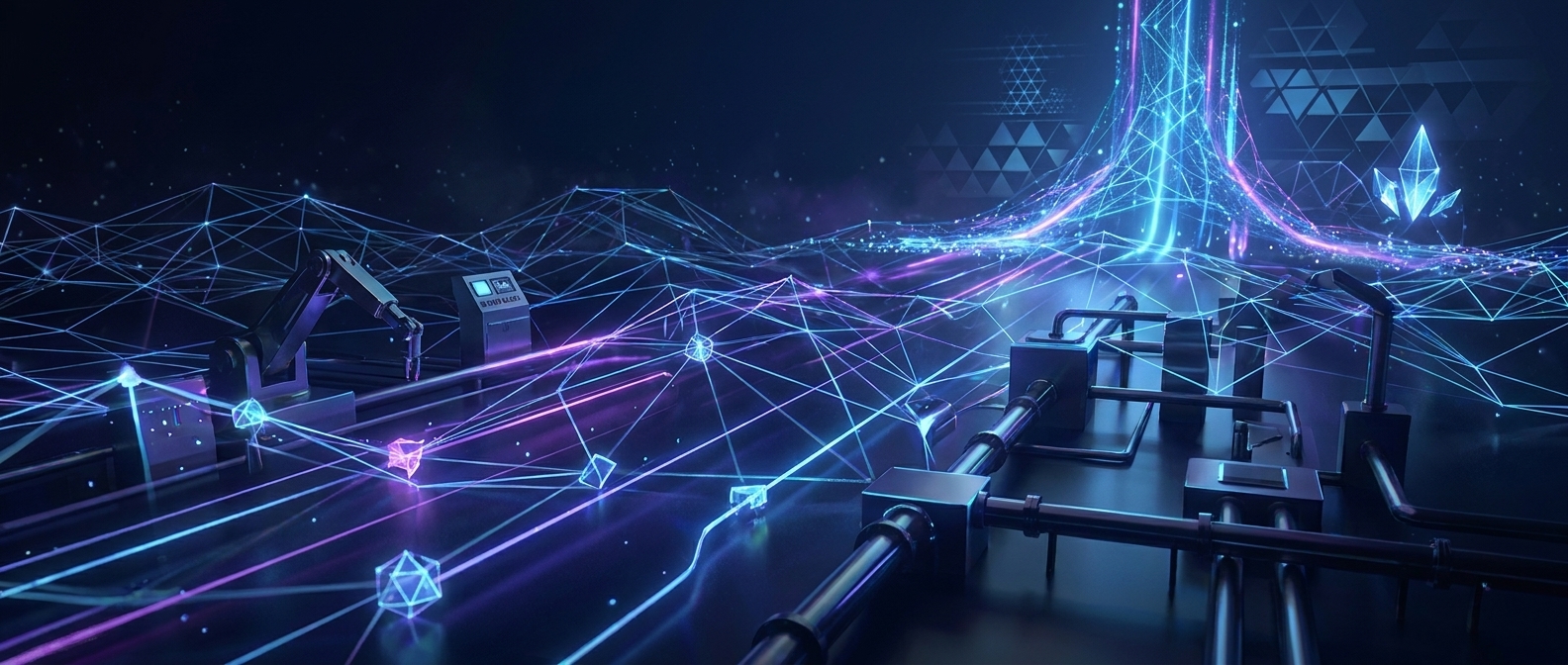
For decades, industrial operations and critical infrastructure have relied on a comfortable but dangerous assumption: physical isolation and network segmentation equal security. If a programmable logic controller (PLC), a remote terminal unit (RTU), or a human-machine interface (HMI) is tucked behind a firewalled virtual local area network (VLAN) inside a physically secured facility, it is assumed safe.
But this "trust by location" model is a relic of an era that no longer exists. Today’s industrial edge is highly connected, characterized by converged IT/OT environments, remote maintenance pathways, and IoT integrations. When organizations attempt to implement Zero Trust policies across these facilities, they often fall into a dangerous trap. They build centralized Zero Trust systems that require cloud-based access brokers for every connection, or they fall back on old habits, treating VLAN membership as a proxy for trust.
If a controller or edge gateway is trusted simply because of its network segment or physical location, it is not Zero Trust. It is the old perimeter security model in disguise. Once an attacker gains a foothold inside that VLAN—whether through a compromised engineering workstation, a rogue physical device, or a supply-chain vulnerability—they can move laterally with ease. Real Zero Trust requires that trust decisions be made continuously at the edge, even when the device is completely disconnected from the central cloud.
The Flaw of Centralized Zero Trust in Operational Technology
Most Enterprise Zero Trust Network Access (ZTNA) solutions were designed for corporate offices, remote knowledge workers, and cloud applications. They rely on continuous connectivity to a centralized policy decision point (PDP) located in the cloud or a central data center. When a user or device requests access, the central broker validates their identity, checks the device posture, and issues a short-lived access token.
This architecture completely breaks down at the operational technology (OT) edge for three primary reasons:
- Latency and Availability Demands: Industrial operations cannot afford the latency of routing local control traffic to a cloud broker and back. If a PLC needs to communicate critical safety data to an HMI, that connection must happen in microseconds. A round-trip to the cloud is out of the question.
- Intermittent Connectivity: Remote substations, offshore platforms, and moving logistics networks frequently experience network dropouts. If security enforcement depends on a live cloud connection, a temporary WAN outage could freeze local control systems or block engineers from performing emergency interventions.
- Insecure Legacy Protocols: Most industrial equipment communicates using protocols like OPC UA, Modbus, or BACnet. These protocols were designed for performance, not security. They lack strong encryption, native identity authentication, and granular access controls.
To bridge this gap, teams often deploy industrial edge gateways to segment networks. But unless those gateways can make localized, autonomous, and cryptographically secure access decisions, they simply fall back to static, vulnerable firewalls.
Conflux and the Decentralization of Trust at the Network Layer
At the network layer, traditional zero-trust architectures rely on a continuous, high-availability connection to a centralized gateway or identity provider. For a manufacturing plant floor or a remote water treatment facility, this assumption is a non-starter. Conflux, VeilNet's secure post-quantum network connector, addresses this challenge by shifting the policy decision point to the physical edge.
Conflux establishes an identity-authenticated mesh network directly between edge endpoints, validating every connection and packet locally. Under Conflux's peer-to-peer routing model, there are no open, listening ports. Nodes are completely dark to unauthorized scanners, creating a robust meta air gap that prevents network discovery and lateral movement. Even if an attacker compromises a device on the same physical switch, they cannot see or communicate with a Conflux-protected endpoint.
Furthermore, Conflux integrates quantum-resistant packet routing, securing data in transit against "harvest now, decrypt later" strategies. Cryptographic keys and access policies are securely distributed and cached locally, ensuring that even if a facility loses external WAN connectivity, the local mesh continues to operate securely and autonomously.
Aether and the Industrial Data Plane
Securing the network layer with Conflux is only half the battle; the security stack must also understand the protocols used by operational technology. Traditional IT zero-trust solutions are blind to industrial protocols like OPC UA, Modbus, or BACnet, which lack native encryption and authentication.
Aether, VeilNet's real-time engine, bridges this gap by sitting directly above the Conflux network layer, providing a secure industrial data plane. Aether delivers native integrations for critical edge protocols, including OPC UA, RESTful APIs, and the Model Context Protocol (MCP) for edge AI and automation. Rather than treating an edge gateway as a simple tunnel, Aether inspects and brokers communication at the application layer.
This enables security architects to define granular, content-aware access controls. For example, an operator can be granted permission to read telemetry data from a sensor via an OPC UA server, while being strictly barred from writing command registers to a PLC, even though both requests flow over the same physical interface. By executing these micro-segmentation policies locally at the edge, Aether maintains the microsecond latency and high-availability operational requirements of critical systems, transforming raw, insecure OT protocols into secure, zero-trust services.
Moving Beyond Perimeter Security to True OT Resilience
Securing critical infrastructure requires shedding the outdated belief that physical boundaries or logical VLANs are sufficient barriers. Modern threats demand an architecture that assumes breach, continuously verifies identity at the lowest protocol layers, and functions reliably in degraded, disconnected environments.
By pairing Conflux's post-quantum, identity-authenticated mesh networking with Aether's real-time industrial data plane, VeilNet provides a comprehensive zero-trust framework designed specifically for the unique demands of operational technology. Organizations can finally move away from the vulnerable, complex perimeter models of the past and embrace a decentralized security posture that protects every endpoint, every packet, and every register from the physical edge to the cloud.
Securing Industrial Control Systems Against Quantum Era Threats
Discover how VeilNet's Conflux and Aether neutralize living-off-the-land threats and secure OT environments with post-quantum mesh networking and a meta air gap.
Securing Industrial Gateways Against Access Control Bypass and Network Exploits
How VeilNet Conflux and Aether resolve critical access control bypass vulnerabilities in remote support gateways to protect operational technology networks.