Hardening AI Tool Infrastructure with Post Quantum Zero Trust
The Evolution of the AI Tooling Layer
The rapid adoption of Large Language Models (LLMs) has shifted from simple chat interfaces to autonomous agents capable of interacting with the physical and digital world. At the heart of this evolution is the Model Context Protocol (MCP), a standard that allows AI models to seamlessly connect to external tools, databases, and industrial sensors. However, as these "sidecar-based" architectures proliferate, they introduce a critical vulnerability: the risk of tool poisoning and lateral movement within the network.
Traditional security models, which rely on perimeter defenses and trusted IP ranges, are fundamentally ill-equipped to handle the dynamic, high-velocity nature of AI-driven tool execution. When an AI agent is granted access to a tool—whether it is a database query or a PLC (Programmable Logic Controller) command—it effectively becomes a privileged actor on the network. If that agent is compromised or fed malicious context, it can become a vector for lateral attacks, moving from a benign data request to an unauthorized system manipulation. To solve this, organizations must move beyond "bolt-on" security and embrace a post-quantum zero-trust framework designed for the era of autonomous systems.
The Vulnerability of the Sidecar
The standard implementation of MCP often involves "sidecar" processes—small, localized servers that act as the interface between the LLM and the local environment. While efficient, these sidecars often operate with implicit trust. Because they are frequently deployed on the same host or within the same container orchestration layer as the AI model, they often bypass traditional firewalls.
The threat of "tool poisoning" occurs when a malicious actor injects prompts or data that trick the LLM into executing unintended actions via its connected tools. In an industrial or high-security environment, this isn't just a data breach; it is a physical risk. If an MCP server has access to an OPC UA server controlling factory hardware, a poisoned model could inadvertently trigger a system shutdown or a dangerous mechanical failure. The challenge is that current security tools cannot distinguish between a legitimate request from an AI agent and a malicious one, because the identity of the requester is often tied to a static IP address or a shared service account rather than a verifiable, cryptographic identity.
Introducing Conflux: The Post-Quantum Network Foundation
Solving the security gap in AI tooling requires a radical shift in how network connectivity is established. This is where VeilNet’s Conflux comes in. Conflux is not a VPN; it is a secure post-quantum network connector designed to handle identity-authenticated mesh networking. By treating every MCP server and AI agent as a distinct, cryptographically identified node, Conflux eliminates the concept of "trust by default" at the network layer.
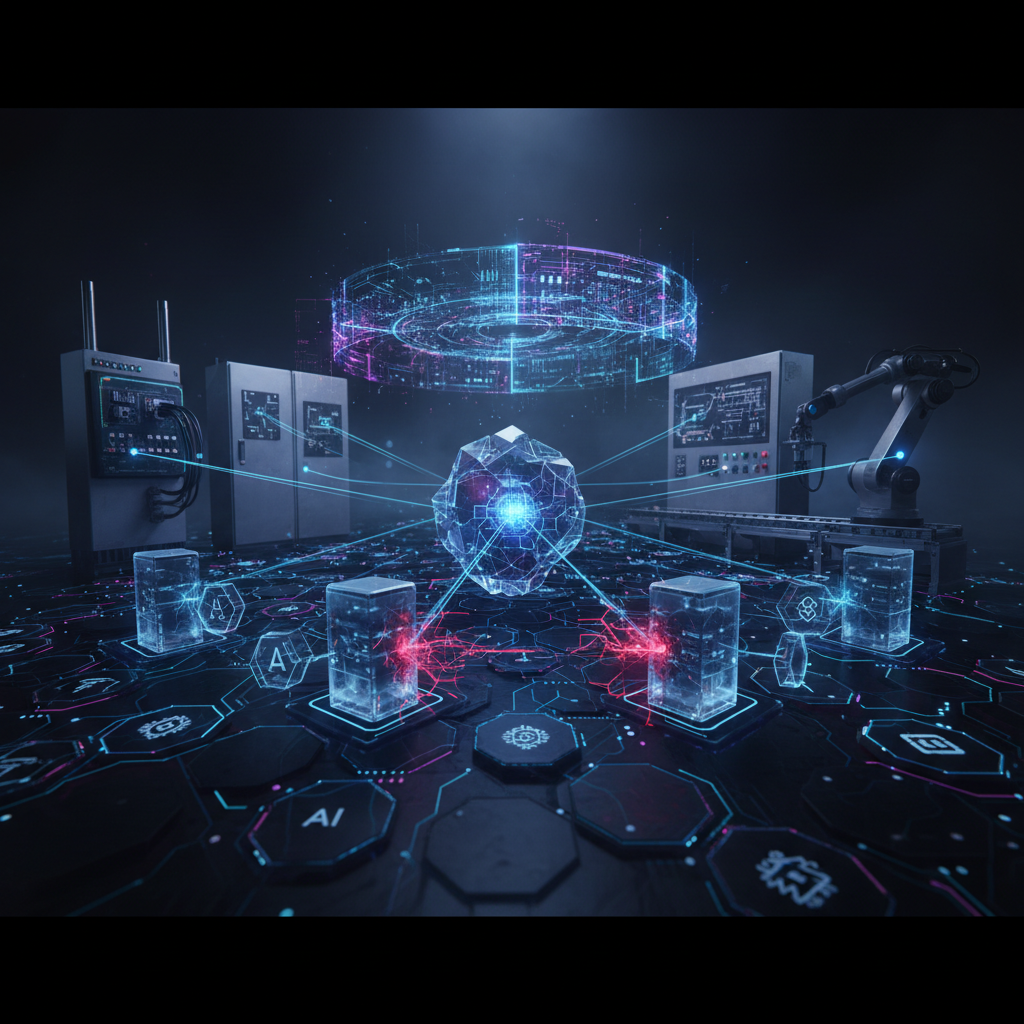
The core of Conflux’s architecture is the Conflux Node. Unlike traditional networking, which relies on routable IP addresses that can be scanned and exploited, Conflux operates as an identity-first mesh. Each node in the network is authenticated using quantum-resistant algorithms, ensuring that even the most sophisticated future adversaries cannot intercept or decrypt the traffic. This creates a "Meta Air Gap"—a logical separation that isolates the AI tooling layer from the rest of the enterprise infrastructure.
In a sidecar-based MCP environment, Conflux ensures that the sidecar server cannot "see" anything on the network except for the specific resources it is explicitly authorized to access. There is no lateral movement because there is no network to move laterally through—only a series of authenticated, point-to-point connections.
Eliminating Lateral Movement with Cryptographic Identity
The primary goal of a zero-trust architecture is to ensure that "assume breach" is not just a slogan but a technical reality. By utilizing Conflux, organizations can enforce granular access policies that are tied to the identity of the specific tool or agent. If an MCP server is compromised via tool poisoning, its potential for damage is strictly limited to the narrow scope of its cryptographic permissions.
Because Conflux handles quantum-resistant packet routing, the data in transit between the AI model and its tools is protected against "harvest now, decrypt later" attacks. This is particularly vital for industrial organizations where the data flowing through MCP servers—such as proprietary manufacturing formulas or critical infrastructure telemetry—remains sensitive for decades. By implementing post-quantum security today, Conflux future-proofs the integrity of the AI-to-machine communication path.
The Aether Engine: Bridging LLMs and Industrial Assets
While Conflux provides the secure "pipes," the Aether Engine provides the intelligent data plane. Aether is VeilNet's real-time engine designed specifically for the complexities of industrial data integration. It acts as the sophisticated translator between the high-level requests of an AI agent and the low-level protocols of the physical world.
Aether handles the heavy lifting of OPC UA, RESTful API, and MCP integrations. When an AI agent needs to query a sensor or adjust a setpoint, it doesn't talk directly to the hardware. Instead, it interacts with Aether, which sits atop the secure Conflux network. This creates a dual layer of protection: Conflux ensures the network path is secure and isolated, while Aether ensures the data exchange is valid and authenticated.
The Aether Engine is capable of mapping complex MCP schemas to industrial data structures in real-time. This allows CISOs and OT engineers to define exactly what an AI model is allowed to "see" and "do" within an industrial environment. For example, an LLM might be permitted to read temperature data from an OPC UA server via Aether but be strictly blocked from writing any control commands, regardless of what the poisoned prompt might suggest.
Securing the Industrial Data Plane
The combination of Conflux and Aether creates a sovereign mesh for industrial AI. In this model, the "department of no" becomes the "department of enablement." Security teams can spin up new AI pilots and MCP-driven tools with the confidence that the underlying infrastructure is resilient to both classical and quantum threats.
Aether provides the visibility that traditional MCP implementations lack. By centralizing the industrial data plane, Aether allows for comprehensive logging and auditing of every tool call made by an AI agent. This metadata is invaluable for detecting the early signs of tool poisoning. If an agent suddenly begins requesting data outside of its normal operational parameters, Aether can flag the anomaly or automatically terminate the session, leveraging the underlying Conflux mesh to instantly revoke the node's identity.
Furthermore, Aether’s support for RESTful API and MCP integrations means that it can serve as a universal adapter for modern AI stacks. Whether an organization is using a hosted LLM or a local, fine-tuned model, Aether ensures that the connection to the industrial environment is always brokered through a zero-trust gateway.
Building the Sovereign Mesh
The convergence of AI agents and industrial control systems represents one of the greatest technological opportunities of the decade, but it also represents a significant expansion of the attack surface. The risk of tool poisoning and the inherent vulnerabilities of sidecar-based MCP servers cannot be ignored.
VeilNet provides the only integrated solution that addresses both the network and data plane challenges of this new era. By deploying Conflux, organizations establish a post-quantum, identity-authenticated foundation that renders lateral movement impossible. By layering Aether on top, they create a secure, real-time engine that bridges the gap between AI intelligence and industrial reality.
As we move toward 2027 and beyond, the "castle-and-moat" approach is not just outdated—it is a liability. The transition to a post-quantum zero-trust architecture is no longer optional for those who wish to harness the power of AI tools without sacrificing the security of their most critical assets. With Conflux and Aether, VeilNet is defining the standard for the next generation of secure, autonomous infrastructure.
How Cryptographic Identity Halts Zero Click Lateral Movement
Learn how zero-click attacks bypass traditional perimeters and how post-quantum zero-trust mesh networks isolate compromised nodes to prevent lateral movement.
Hardening Industrial Infrastructure with the Meta Air Gap
Discover how the Meta Air Gap and post-quantum zero trust networking shield legacy OT environments and critical infrastructure from modern cyber threats.