Dismantling the Illusion of Perimeter Security in Operational Technology
The Fallacy of the Hard Shell
For decades, the security of critical infrastructure and industrial environments rested on a single, comforting assumption: the air gap. The prevailing wisdom held that if operational technology (OT) systems were physically disconnected from the public internet, they were inherently safe. This "mote and castle" strategy created a hard outer shell—the perimeter—and a soft, trusting interior. Inside that perimeter, devices, sensors, and controllers operated under a model of implicit trust. If a packet was on the network, it was assumed to belong there.
That era is over. The reality of modern industrial operations—characterized by remote monitoring, predictive maintenance, and cloud-integrated analytics—has fundamentally dissolved the physical air gap. Today, the "hard shell" is more of a sieve. Adversaries have adapted accordingly, moving beyond simple brute-force attacks to sophisticated "living-off-the-land" techniques. These attackers no longer need to bring their own tools; they use the network’s own protocols and administrative utilities to blend into normal operations, moving laterally from a compromised workstation to a high-value programmable logic controller (PLC).
Recent developments in the threat landscape have made one thing clear: perimeter-based defenses are no longer sufficient. When malware families specifically designed to disrupt physical processes can navigate internal networks with ease, the "assume breach" mentality is no longer a choice—it is a requirement. To survive, industrial organizations must dismantle the model of implicit trust and replace it with a framework that verifies every identity, every request, and every packet, regardless of where it originates.
Why Identification Must Replace Location
In a traditional OT environment, security is defined by location. If a device is plugged into a specific VLAN or connected via a standard VPN, it is granted a level of trust. This is the fundamental flaw that modern attackers exploit. Once they bypass the initial entry point, the lack of internal segmentation allows them to survey the entire landscape.
The shift toward Zero Trust requires a complete inversion of this logic. Access should never be granted based on network location; it must be granted based on cryptographically verified identity. This is where the concept of the "meta air gap" becomes transformative. Instead of relying on physical isolation that is increasingly impossible to maintain, organizations need a logical isolation that exists at the networking layer itself.
This transition is not merely about adding another layer of firewalls. It is about moving toward an identity-authenticated mesh where the network itself is invisible to anyone—or anything—not explicitly authorized to see it. In this model, there is no "internal" network to traverse. There are only secure, authenticated pathways between verified endpoints.
Conflux and the Architecture of the Meta Air Gap
To address the collapse of the perimeter, VeilNet provides Conflux, a secure post-quantum network connector designed to rebuild trust from the packet level up. Conflux represents a departure from traditional networking by implementing an identity-authenticated mesh.
Unlike a standard SD-WAN or VPN, which often creates a tunnel into a trusted zone, Conflux ensures that no communication can occur until identity is proven. This creates the "meta air gap"—a state where devices are connected to the network fabric but remain entirely unreachable and invisible to unauthorized actors. This "dark" infrastructure effectively neutralizes lateral movement. If an attacker gains access to a single node, they do not see a local network of vulnerable neighbors; they see nothing.
Technical architects and CISOs face a secondary, looming threat: the "Harvest Now, Decrypt Later" strategy. Adversaries are currently intercepting and storing encrypted data with the intent of decrypting it once cryptographically relevant quantum computers become available. Conflux counters this through quantum-resistant packet routing. By integrating post-quantum cryptography (PQC) into the heart of the network mesh, Conflux ensures that the data being moved today remains secure for decades, protecting the long-lifecycle assets common in OT environments.
Securing the Industrial Data Plane with Aether
While Conflux handles the foundational networking and quantum-resistant connectivity, the challenge of industrial security often lies higher up the stack. Industrial environments rely on a specialized language of protocols—OPC UA, Modbus, and various proprietary standards—that were rarely designed with modern security in mind.
VeilNet Aether acts as the real-time engine that sits above the Conflux network layer, providing a secure industrial data plane. Aether is specifically engineered to handle the complexities of OT data movement. It provides native integration for OPC UA, allowing legacy industrial data to be moved securely without the risks associated with traditional port-forwarding or vulnerable "jump boxes."
By acting as a secure gateway, Aether translates these industrial protocols into secure, manageable streams. Furthermore, Aether supports RESTful API and Model Context Protocol (MCP) integrations. This is a critical capability as more industrial operators look to integrate Artificial Intelligence (AI) and Machine Learning (ML) into their workflows. Through Aether, organizations can feed high-fidelity industrial data to AI models via MCP, ensuring that the integration is brokered through a zero-trust architecture. This allows for the benefits of "AI-driven industry" without exposing the underlying control systems to the risks typically associated with web-connected AI agents.
Preparing for the Post-Quantum Era
The push for Zero Trust in OT is not just about stopping current attackers; it is about future-proofing critical infrastructure against the next generation of threats. The transition to post-quantum standards is often viewed as a distant concern, but for infrastructure with an expected lifespan of 20 to 30 years, the threat is immediate.
Most current encryption standards, including RSA and ECC, will be trivial to break for a quantum computer. For a water treatment plant or a power grid, a security breach twenty years from now using data stolen today is a catastrophic risk. By adopting the VeilNet platform, organizations are not just implementing Zero Trust; they are implementing Post-Quantum Zero Trust.
The combination of Conflux’s quantum-resistant routing and Aether’s secure data plane creates a comprehensive defense-in-depth strategy. It moves the security focus from the perimeter to the data itself and the identities that interact with it. This architecture ensures that even as the tools of the adversary evolve—from simple malware to quantum-powered decryption—the core of the industrial operation remains resilient.
A New Standard for Critical Infrastructure
The guidance from global cybersecurity agencies is clear: dismantle implicit trust. The "assume breach" philosophy is the new baseline for any organization managing operational technology. However, implementation has historically been the bottleneck. The complexity of retrofitting Zero Trust onto legacy systems often leads to security exceptions that weaken the entire defense.
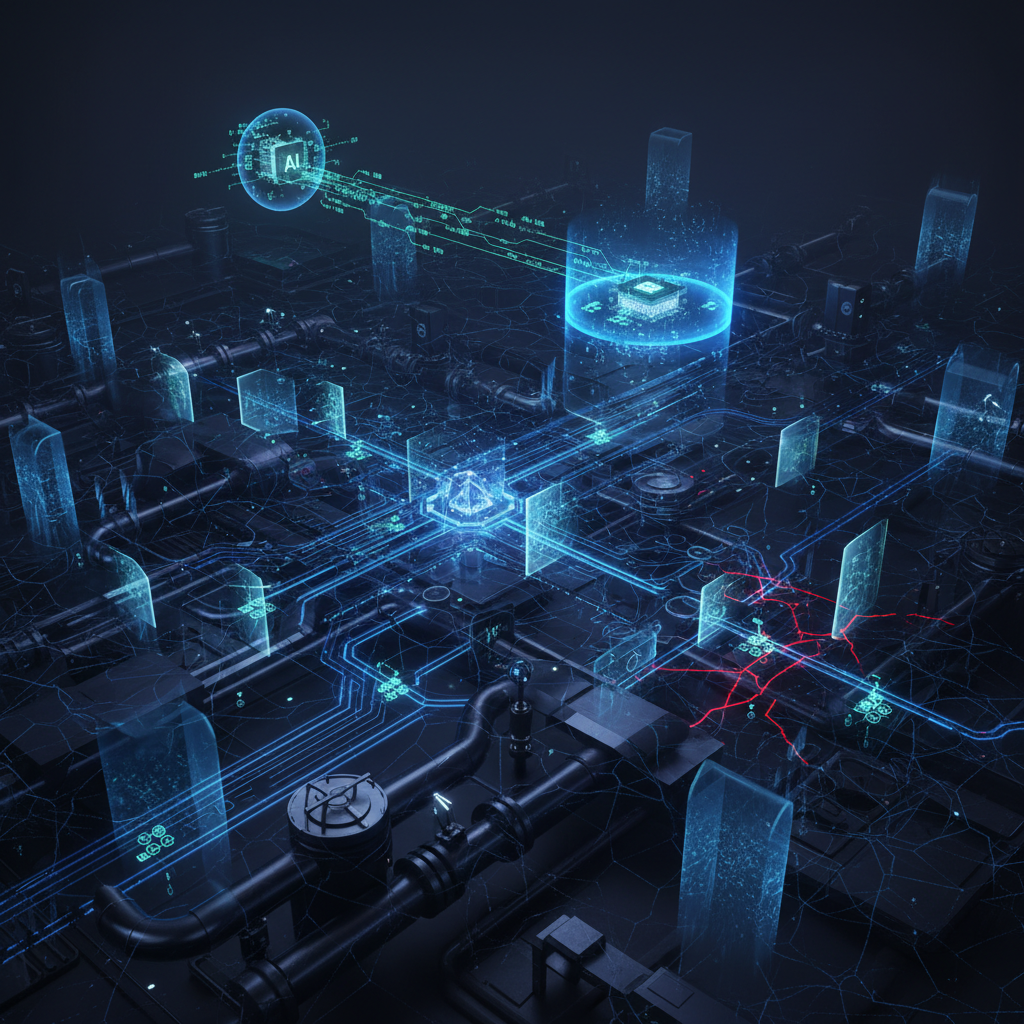
VeilNet simplifies this transition by separating the network concerns from the data concerns. Conflux provides the secure, invisible, and quantum-resistant "pipes," while Aether provides the intelligent, protocol-aware "valves" that control the flow of industrial information.
By moving away from perimeter-based defenses and embracing an identity-centric, post-quantum mesh, industrial operators can finally close the gap between OT and IT security. They can embrace the advantages of a connected, AI-enhanced industrial future without inheriting the vulnerabilities of the legacy internet. The era of the perimeter is over, but the era of the meta air gap has just begun. Proper security in the modern age requires more than just a better firewall; it requires a fundamental reimagining of how packets move and how trust is established. Through Conflux and Aether, VeilNet provides the roadmap for that transformation.
Demolishing the LAN Fallacy with Post Quantum Edge Trust
Eliminate physical perimeter security risks. Secure operational technology and edge networks with VeilNet Conflux and Aether post-quantum zero-trust mesh.
The Edge Controller Fallacy and the Path to Quantum Resistant Industrial Zero Trust
Discover why VLAN-based edge security fails OT environments and how VeilNet Conflux and Aether deliver quantum-resistant zero-trust protection at the edge.