Defending Critical Infrastructure with Post Quantum Zero Trust Architecture
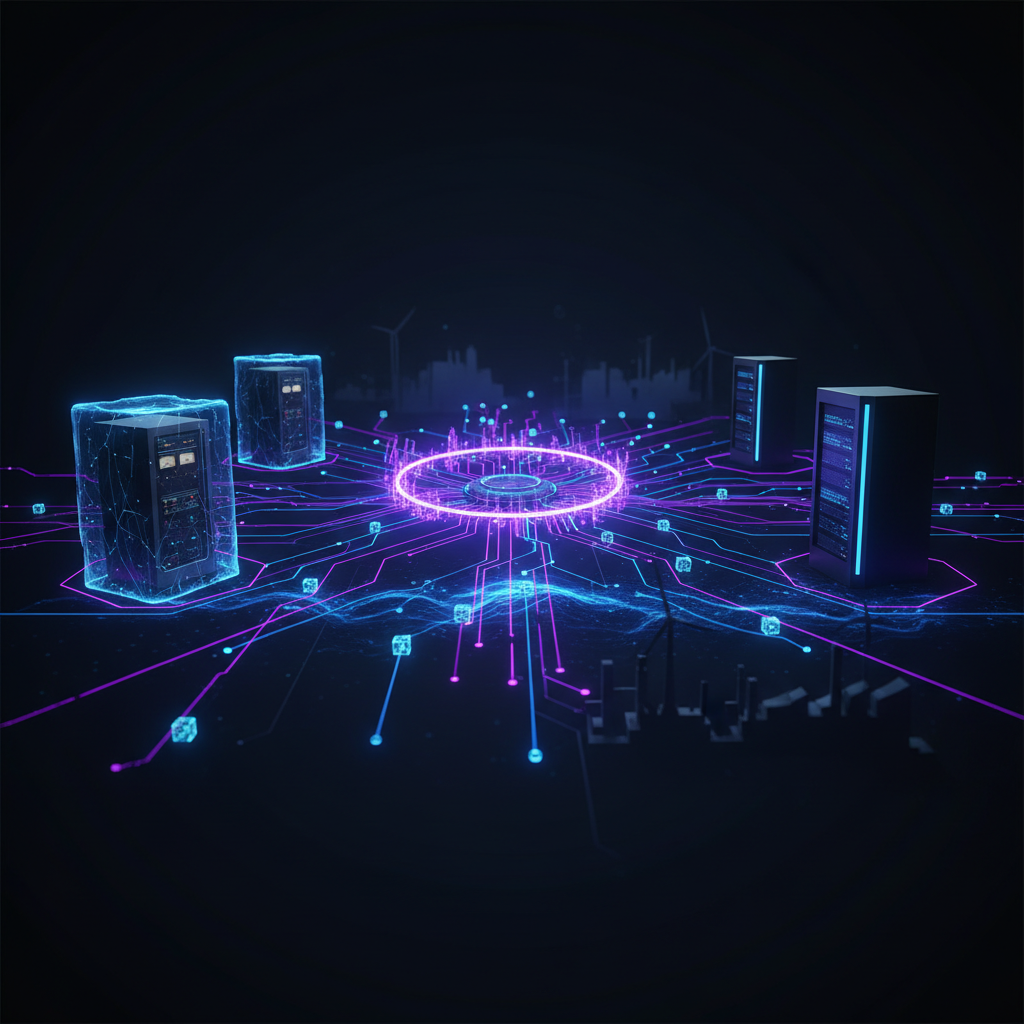
Operational technology (OT) is no longer an island. For decades, the industrial sector relied on the "air gap" as its primary defense—the simple physical disconnection of critical control systems from the public internet. But as the demand for real-time analytics, remote monitoring, and preventative maintenance has grown, those gaps have been bridged by a thousand small concessions. Today, modern industrial environments are hyper-connected, yet they remain tethered to legacy hardware and protocols never designed to withstand the sophistication of a modern digital assault.
The reality facing infrastructure architects today is a persistent and silent threat. Sophisticated adversaries are no longer interested in simple, loud "smash and grab" attacks. Instead, they are pre-positioning themselves within these networks, exploiting improperly secured pathways to gain a foothold. Once inside, they move laterally, waiting for the opportune moment to disrupt power grids, water treatment plants, or manufacturing lines. In this environment, the traditional perimeter is not just insufficient; it is an illusion.
To secure these legacy environments, we must move beyond the reactive cycle of detection and containment. We must adopt an architecture that assumes the network is already compromised and demands cryptographic proof of identity for every single interaction. This is the foundation of VeilNet’s post-quantum zero-trust architecture.
The Myth of the Physical Air Gap
The notion that critical infrastructure can remain physically isolated while still being operationally efficient is a dangerous fallacy. Every HVAC system, door controller, and energy management tool added to a facility creates a potential entry point. When these systems are networked together using legacy protocols, a breach in a low-priority system can quickly escalate into a full-scale compromise of the industrial control system (ICS).
The problem is compounded by legacy constraints. Many of the Programmable Logic Controllers (PLCs) and Human-Machine Interfaces (HMIs) powering our infrastructure were installed decades ago. These devices lack the processing power to support modern encryption or complex authentication. Replacing them is a multi-billion dollar "rip and replace" nightmare that most organizations cannot afford.
The solution is not to try and force security onto these legacy devices, but to wrap them in a modern, secure envelope. VeilNet achieves this through a dual-product approach: Conflux for the network layer and Aether for the data plane.
Conflux and the Creation of the Meta Air Gap
Traditional Zero Trust Network Access (ZTNA) solutions often rely on central gateways or "brokers" that can themselves become single points of failure. VeilNet Conflux takes a fundamentally different approach by building an identity-authenticated mesh network.
Conflux acts as a post-quantum network connector. It doesn't just encrypt traffic; it redefines how packets are routed. In a Conflux-enabled environment, every endpoint—whether it is a modern server or a legacy PLC—is part of a peer-to-peer mesh. Before a single packet is moved, identity must be cryptographically verified. If an entity is not authorized to communicate with a specific resource, that resource is effectively invisible to it.
This creates what we call the "meta air gap." Unlike a physical air gap, which is brittle and easily bypassed, the meta air gap is software-defined and absolute. It hides the entire network topology from unauthorized eyes. To an attacker sitting on a compromised device within the facility, the rest of the network doesn't just look "locked"—it doesn't appear to exist at all.
Furthermore, Conflux is built for the future. We are currently in the era of "Harvest Now, Decrypt Later" (HNDL), where adversaries capture encrypted traffic today with the intention of decrypting it once large-scale quantum computers become available. Conflux mitigates this risk by utilizing quantum-resistant packet routing. By implementing post-quantum cryptographic (PQC) algorithms at the networking layer, VeilNet ensures that the data moving through your infrastructure today remains secure for decades to come.
Aether and the Industrial Data Plane
If Conflux handles the "who" and "where" of networking, VeilNet Aether handles the "what" of industrial operations. Aether is the real-time engine that provides a secure industrial data plane above the Conflux network layer.
In an OT environment, the primary challenge is data interoperability. Modern engineering teams need access to data from legacy sensors and PLCs, typically using protocols like OPC UA. However, exposing an OPC UA server to the network is a massive security risk, as many implementations have known vulnerabilities.
Aether solves this by acting as a secure intermediary. It integrates natively with industrial protocols like OPC UA, as well as RESTful APIs and the Model Context Protocol (MCP). Instead of giving a user or an application direct network access to a legacy device, Aether allows them to interact with the data through a secure, authenticated interface.
For example, an OT engineer can use Aether to pull real-time telemetry from a turbine via OPC UA. The engineer’s request is authenticated by Conflux, and the data is retrieved and served by Aether. At no point does the engineer have direct, unmitigated access to the turbine's network interface. This granular control over the data plane prevents lateral movement and ensures that even if a user’s credentials are stolen, the damage they can do is strictly limited to the specific data sets they are authorized to access.
Bridging Legacy Constraints with Modern Intelligence
The integration of Aether and Conflux allows for a level of security that was previously impossible in legacy environments. Because Aether supports the Model Context Protocol (MCP), organizations can safely integrate AI-driven analytics and agentic workflows into their OT strategy.
Imagine an AI agent tasked with optimizing the energy consumption of a manufacturing plant. In a traditional network, giving an AI agent the necessary access would require opening numerous firewall ports and potentially exposing the entire ICS. With VeilNet, the AI agent is treated as a non-human identity. It is authenticated through Conflux and interacts only with the specific data points it needs via Aether. This "least privilege" access is enforced at the protocol level, ensuring that the AI can perform its job without becoming a liability.
This architecture also addresses the "containment" problem. In a standard network, once an adversary gains initial access, they can often spend weeks or months mapping the environment. In a VeilNet-protected environment, there is no environment to map. Because every connection is peer-to-peer and identity-driven, there is no broad network to scan. Containment is the default state of the network.
The Path to Cyber Resilience
The threat to our critical infrastructure is not theoretical; it is a clear and present danger. Nation-state actors are actively looking for the weak points in our energy, water, and transportation systems. They are banking on the fact that our reliance on legacy technology will prevent us from implementing modern security measures.
VeilNet proves them wrong. By decoupling security from the underlying hardware, we allow organizations to implement a world-class, post-quantum zero-trust architecture today, without the need for expensive equipment upgrades.
Conflux provides the secure, invisible foundation—a post-quantum mesh that eliminates the attack surface and renders the network unreachable to unauthorized parties. Aether provides the intelligent data layer, allowing for the secure flow of industrial information through OPC UA and modern APIs.
Together, these tools move us from a posture of fragile perimeter defense to one of robust cyber resilience. We can finally stop worrying about who is trying to get into our networks and start focusing on the mission-critical operations that keep our society running. The era of the "unsecured legacy system" is over. With VeilNet, the future of industrial infrastructure is secure, invisible, and quantum-ready.
Defending AI Model Context Protocols against Tool Poisoning and Lateral Attacks
Learn how to secure MCP servers and AI agents using VeilNet's post-quantum zero trust architecture to prevent tool poisoning and lateral movement in OT networks.
Defending Industrial Infrastructure Beyond the False Security of Traditional Air Gaps
Learn how VeilNet secures legacy OT environments using post-quantum zero trust and industrial data engines to eliminate lateral movement and network exposure.