Securing Water Utility Critical Infrastructure Against Cellular Gateway Exploits
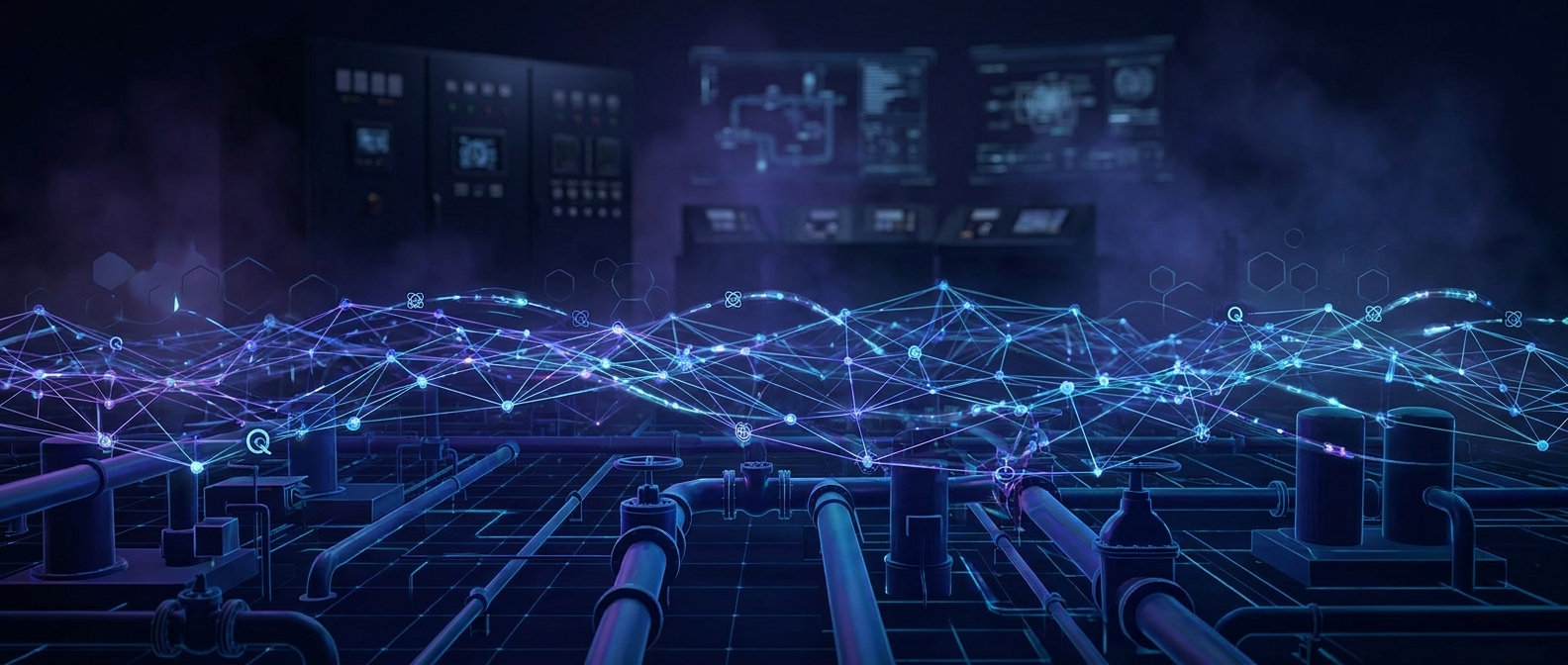
Critical water systems are facing an unprecedented wave of targeted cyber campaigns. State-sponsored threat actors are actively exploiting a long-standing architectural blind spot in municipal utility networks. This vulnerability centers on the cellular modems used to connect remote water pumps, storage tanks, and flow sensors. Since July, utility companies across at least seven states have experienced unauthorized intrusions that expose a harsh reality.
Many municipal water systems span massive, geographically distributed footprints. Laying physical fiber-optic lines to every remote telemetry unit, programmable logic controller (PLC), or human-machine interface (HMI) is economically impossible. To solve this, operators rely on cellular modems to transmit critical operational technology (OT) data. This convenience, however, introduces massive risk.
Many of these cellular modems sit on the public internet with open ports, weak access credentials, or unpatched firmware. Attackers do not need to breach the primary corporate network to disrupt water treatment. Instead, they scan cellular IP ranges to identify exposed modems. Once they find a target, they exploit software vulnerabilities or leverage default passwords to gain a foothold.
From there, the consequences are immediate and severe. A compromised modem allows an adversary to pivot directly into the OT environment. They can manipulate chemical dosing levels, shut down water distribution pumps, and alter sensor feedback. This blinds the central SCADA system to the active sabotage.
Legacy defensive strategies are wholly inadequate against this attack vector. Firewalls, virtual private networks (VPNs), and private Access Point Names (APNs) assume that the cellular transport layer is inherently secure. A VPN endpoint still requires an open listening port to accept incoming connections. This open port remains visible to scanning tools, inviting zero-day exploits and brute-force attacks.
Furthermore, traditional VPNs grant broad network-level access once authenticated. If a single remote modem is compromised, the entire OT segment is exposed to lateral movement. Critical infrastructure needs an architecture that eliminates the public footprint of remote gateways. The modern utility network must prevent lateral movement entirely.
Invisible Transport and Quantum-Resistant Routing with Conflux
VeilNet addresses this critical cellular vulnerability at the transport layer through Conflux. Conflux is an identity-authenticated mesh networking platform that completely redesigns how remote telemetry connects to central control systems. Instead of exposing cellular modems to the public internet, Conflux implements a meta air gap. This architecture eliminates open listening ports entirely.
Conflux endpoints do not listen on public IP addresses. Instead, they initiate outbound-only, cryptographically verified UDP connections to establish a secure, peer-to-peer mesh. Because there are no open ports, a remote water pump or PLC is invisible to scanning tools used by state actors. Attackers searching cellular IP ranges find nothing but silent, non-responsive endpoints.
This immediately halts the scanning and reconnaissance phase of cellular exploits. The meta air gap ensures that utility infrastructure remains hidden from the public internet, even while using public cellular networks. Authentication within the Conflux mesh is continuous and cryptographically bound to the device identity. Unlike legacy cellular VPNs that rely on static credentials, Conflux validates the cryptographic identity of every node before any packet is routed.
This identity-authenticated mesh networking ensures that a compromised credential or cloned SIM card cannot grant access. Every device must possess a valid, hardware-bound cryptographic key to participate in the mesh. Furthermore, state-sponsored adversaries are actively intercepting encrypted critical infrastructure telemetry to decrypt it later. Conflux neutralizes this long-term threat through quantum-resistant packet routing.
Every packet moving across the cellular mesh is encrypted using post-quantum cryptographic algorithms. This ensures that even if an adversary intercepts the wireless cellular transmission, the data remains permanently unreadable. Conflux secures critical water telemetry against both immediate network intrusions and future quantum decryption capabilities. Legacy transport encryption is no longer enough to secure critical infrastructure.
Isolating the Industrial Data Plane with Aether
Securing the network transport layer is only the first step. To completely stop lateral movement, the data plane must also be isolated and controlled. This is where Aether sits, operating directly above the Conflux network layer to manage and protect industrial data streams. In a typical water utility, remote modems and PLCs communicate using specialized industrial protocols.
Aether integrates directly with these protocols, specifically handling OPC UA, RESTful API, and Model Context Protocol (MCP) integrations. If an attacker physically accesses a remote cellular modem or compromises a local sensor, Conflux limits their access to that specific node. Aether ensures they cannot exploit the underlying industrial protocols to send malicious commands to other systems. It acts as an intelligent gateway for OPC UA and RESTful API data streams.
Aether parses and validates every operational command before it is delivered to the PLC or HMI. For example, Aether intercepts and inspects all OPC UA traffic passing through the remote link. It enforces granular, identity-bounded schemas and data-flow policies. If a compromised node attempts to transmit an unauthorized command, Aether identifies the anomaly.
It immediately blocks the unauthorized protocol command, logging the event and alerting operators. This occurs even if the packet originated from a valid network node. Additionally, Aether secures RESTful API endpoints and modern MCP integrations used in smart utility automation. This ensures that any software-defined control signals or automated queries are strictly restricted.
By decoupling the raw industrial protocols from the transport layer, Aether eliminates the possibility of lateral command injection. Attackers are blocked from manipulating critical physical processes like chemical dosing or pump operations. The operational blast radius is isolated to the single compromised endpoint. This prevents a minor perimeter breach from turning into a public health crisis.
Eliminating Implicit Trust in Municipal Utilities
Protecting essential services requires a complete departure from perimeter-based security. Relying on firewalls, traditional VPNs, or private cellular networks to protect critical PLCs and HMIs is no longer viable. The vulnerability of municipal water systems across multiple states highlights the urgent need for a zero-trust model built for operational technology. VeilNet delivers this model by separating network transport from the industrial data plane.
Conflux provides the invisible, quantum-resistant mesh network that hides remote cellular connections from public view. The Aether layer sits above this transport network to cryptographically validate and govern industrial protocols like OPC UA and RESTful APIs. Together, these technologies ensure that water utility operators can leverage cellular networks safely. Municipal infrastructure remains protected from hostile, state-sponsored exploitation.
Securing Critical Water Infrastructure and Halting OT Cellular Lateral Movement
Learn how VeilNet secures critical water infrastructure telemetry, preventing lateral movement from compromised cellular modems without exposing IP addresses.
How Post Quantum Architecture Solves the Operational Technology Zero Trust Impasse
Learn how VeilNet uses post-quantum cryptography, Conflux, and Aether to solve the zero-trust impasse for legacy operational technology (OT) networks.