Defeating Lateral Movement in Industrial Networks with Post Quantum Zero Trust
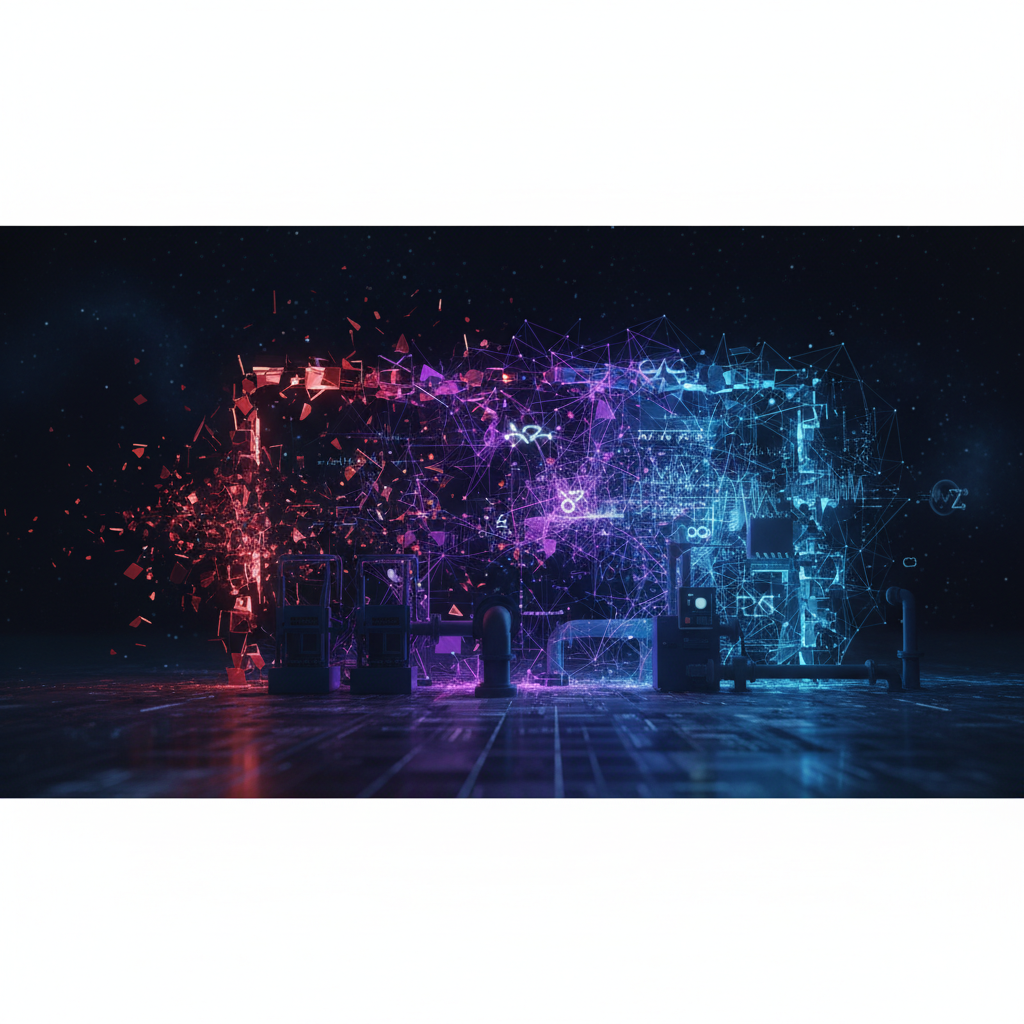
The Collapse of the Industrial Perimeter
The security of operational technology (OT) has reached a critical inflection point. For decades, the primary defense for industrial control systems was physical isolation—the air gap. But the demands of modern business, from real-time analytics to remote maintenance, have systematically dismantled those barriers. As IT and OT environments converge, the pathways into the heart of critical infrastructure have multiplied, leaving infrastructure architects and CISOs with a harrowing reality: the traditional perimeter is not just leaking; it has effectively ceased to exist.
Recent federal guidance emphasizes a shift in mindset. Adversaries are no longer just breaking in; they are "living off the land." They use legitimate administrative tools and protocols to blend into normal operations, moving laterally from a compromised workstation in a corporate office to a programmable logic controller (PLC) on a factory floor. When the network relies on location-based trust—where anything "inside" the firewall is considered safe—a single compromised credential can lead to a total shutdown of physical processes.
The challenge is that OT environments are notoriously difficult to secure with standard IT tools. Legacy hardware often lacks the processing power for modern security agents, and the risk of a security scan crashing a sensitive industrial sensor makes traditional vulnerability management a non-starter. To bridge this gap, organizations need a new architecture that provides the benefits of connectivity without the inherent exposure of the public internet. This is where the transition to a post-quantum zero-trust framework becomes mandatory.
Establishing the Meta Air Gap with Conflux
The solution to the disappearing physical air gap is the creation of a "Meta Air Gap." VeilNet’s Conflux serves as the foundation for this architecture. Unlike a VPN, which often grants broad network access once a user is authenticated, Conflux operates on a strictly identity-authenticated mesh networking model. It does not matter where a device is physically located or what its IP address is; the only thing that matters is its cryptographically verified identity.
Conflux utilizes a peer-to-peer mesh architecture that effectively hides your infrastructure from the public internet. By creating an overlay network, Conflux ensures that resources are invisible to unauthorized scans. There are no open ports to exploit because the connection is only established after mutual identity verification. This is a fundamental shift from the "connect then authenticate" model of the past to an "authenticate then connect" model.
For OT engineers, this means that remote access to sensitive equipment no longer requires exposing a RDP port or managing complex, brittle VPN tunnels. Conflux handles the packet routing with a focus on high-performance, low-latency connectivity, ensuring that the control signals necessary for industrial operations are never compromised by the overhead of the security layer.
Quantum Resistance in the Industrial Core
While many organizations are still struggling with basic zero-trust implementation, the threat landscape is already moving toward the quantum era. State-sponsored actors are currently engaged in "harvest now, decrypt later" attacks, capturing encrypted industrial data today with the intention of decrypting it once cryptographically relevant quantum computers (CRQCs) become available.
VeilNet addresses this through the integration of post-quantum cryptography (PQC) directly into the Conflux network layer. By utilizing NIST-standardized quantum-resistant algorithms, Conflux ensures that the identities and the data being routed through the mesh are protected against future quantum threats. For critical infrastructure intended to remain in service for twenty or thirty years, post-quantum security is not a luxury—it is a prerequisite for long-term viability.
This quantum-resistant packet routing creates a future-proof tunnel for sensitive industrial data. Whether that data is a proprietary chemical formula, a power grid load balance, or a municipal water treatment command, it remains protected by the highest standard of encryption available today and tomorrow.
Aether and the Industrial Data Plane
Connectivity is only half of the equation. In an OT environment, the real value lies in the data—specifically, how that data is translated from the machine level to the application level. VeilNet’s Aether acts as the real-time engine that sits above the Conflux network layer, providing a secure industrial data plane.
Aether is designed to handle the specific protocols that run the modern world. Its native support for OPC UA (Open Platform Communications Unified Architecture) allows for the seamless ingestion and orchestration of industrial telemetry. By running Aether on top of a Conflux mesh, organizations can move OPC UA traffic across geographic boundaries and different network segments without ever exposing the raw industrial protocols to the open web.
Furthermore, Aether provides the integration hooks necessary for modern automation, including RESTful APIs and the Model Context Protocol (MCP). This enables a secure, bi-directional flow of information between the plant floor and the AI-driven analytics engines in the cloud. Because Aether inherits the zero-trust properties of the underlying Conflux network, every API call and every MCP-driven data request is fully authenticated and logged, providing the granular visibility required for modern compliance and security audits.
Securing the Agentic Workforce
As we move toward an era of "agentic" operations—where AI agents and non-human identities perform routine monitoring and adjustments—the identity footprint of an organization is expanding exponentially. Traditional Identity and Access Management (IAM) systems are often ill-equipped to handle the lifecycle of these autonomous agents.
VeilNet’s architecture treats human and non-human identities with the same level of rigor. Through Aether’s integration capabilities, security teams can define precise policies for what an AI agent can see and do within the industrial network. If an agent is tasked with monitoring vibration sensors via an MCP integration, Aether ensures it cannot suddenly pivot to modifying the speed of a turbine. This granular authorization is the ultimate defense against the escalation of a breach.
Realizing Total Network Visibility
One of the greatest risks in OT security is the unknown. You cannot secure what you cannot see. Traditional network monitoring often struggles with the "dark corners" of legacy subnets and remote field sites. By moving all industrial traffic into the Conflux and Aether ecosystem, organizations gain a "single pane of glass" view into their entire operational landscape.
Every connection within the mesh is documented. Every data exchange through Aether is verified. This level of observability allows OT engineers to identify anomalies—such as a PLC suddenly attempting to communicate with an external IP—before they escalate into a full-scale operational crisis. The visibility provided by VeilNet transforms the security team from a "department of no" into a strategic partner that enables the business to innovate safely.
The Path Forward for Infrastructure Architects
The transition to a zero-trust model in OT is a journey, not a destination. It requires moving away from the "castle and moat" mentality and embracing an architecture where security is baked into the network fabric itself. By leveraging Conflux for secure, post-quantum connectivity and Aether for a robust industrial data plane, organizations can finally solve the paradox of the modern industrial network: how to be fully connected while remaining completely invisible to the adversary.
The era of relying on simple firewalls and "security through obscurity" is over. As threats become more sophisticated and the consequences of downtime become more severe, the only viable path is a unified, identity-centric, and quantum-resistant framework. With VeilNet, that framework is no longer a theoretical goal—it is a deployable reality. By securing the connection at the identity level and the data at the protocol level, we can ensure that the systems that underpin our modern world remain resilient against any attacker, no matter how advanced.
Building Resilient Industrial Networks with Post Quantum Zero Trust
Explore how VeilNet Conflux and Aether address legacy OT security constraints with post-quantum mesh networking and secure industrial data integration.
Defeating Nation State Pre Positioning in Critical Infrastructure with Post Quantum Zero Trust
Discover how VeilNet Conflux and Aether defeat nation-state pre-positioning in critical OT infrastructure using post-quantum zero-trust network security.