Building Resilient Industrial Networks with Post Quantum Zero Trust
The Industrial Security Paradox
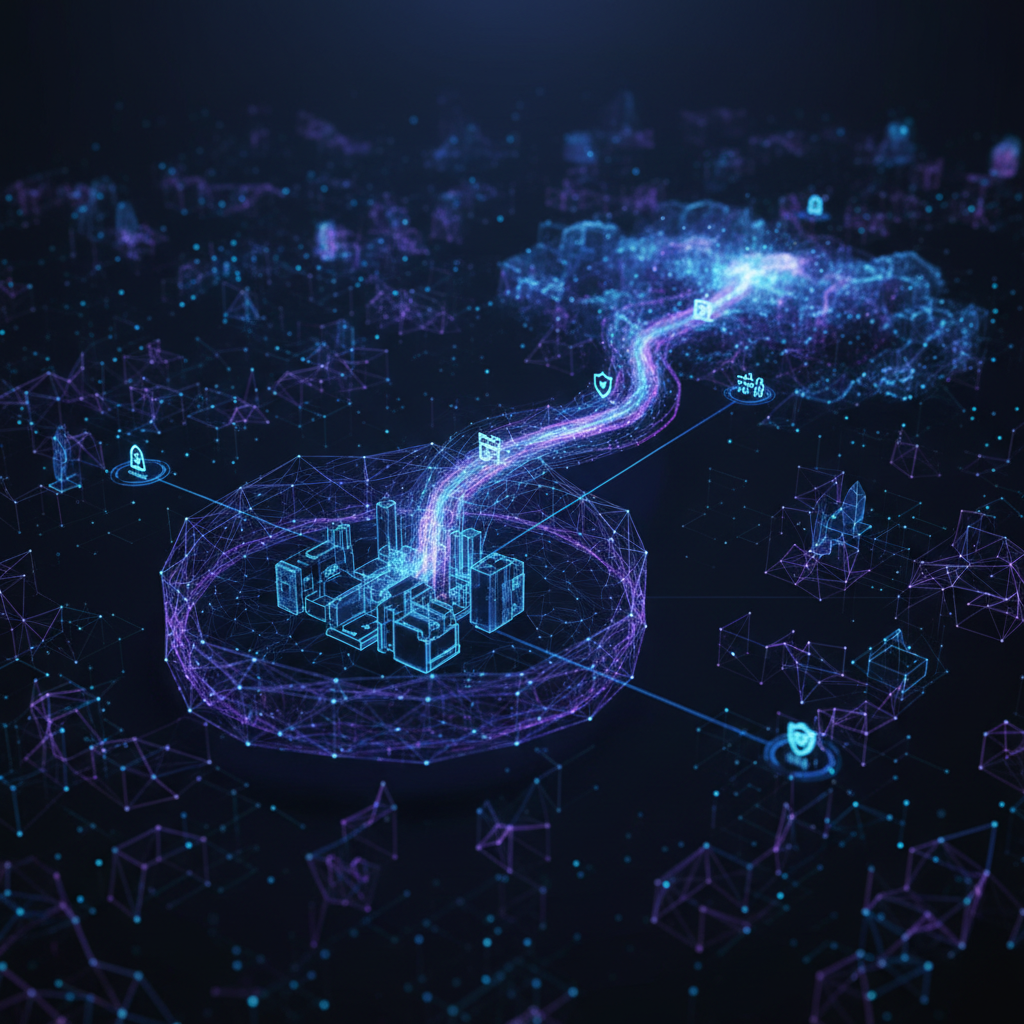
Industrial control systems and operational technology (OT) environments are currently facing an unprecedented convergence. For decades, these systems were protected by physical isolation—the legendary "air gap." As long as the factory floor or the power substation wasn’t connected to the internet, it was assumed to be safe. However, the modern requirement for real-time data analytics, predictive maintenance, and remote monitoring has shattered that isolation. Today, OT networks are increasingly interconnected, digitally monitored, and remotely operated.
While this connectivity drives efficiency, it creates a massive, expanded attack surface. Threat actors are no longer targeting just the IT office suite; they are actively pre-positioning on OT networks, seeking control over the HVAC, energy control, and life-safety systems that underpin critical infrastructure. The primary challenge is that these environments are often built on legacy foundations—PLCs and controllers that were designed years, if not decades, before cybersecurity was a primary concern. These legacy constraints mean that standard security tools, like endpoint agents or heavy encryption overhead, often cannot be deployed directly on the hardware.
The industry needs a new approach that provides the security of an air gap with the flexibility of modern cloud-native networking. This is the challenge VeilNet addresses through its core products: Conflux and Aether.
Bridging the Legacy Gap with Conflux
Traditional network security relies on perimeter defense—firewalls and VPNs. Once an attacker breaches that perimeter through a stolen credential or a compromised device, they can often move laterally across the network with ease. In an OT environment, this lateral movement can be catastrophic.
VeilNet Conflux redefines this architecture by implementing identity-authenticated mesh networking. Instead of relying on IP addresses or network locations, Conflux establishes security based on the cryptographic identity of every node. This creates what we call a "meta air gap." To an unauthorized user, the network components simply do not exist. There are no open ports to scan and no visible pathways to exploit.
Conflux handles the foundational layer of secure networking. It creates a software-defined perimeter that allows for granular, peer-to-peer connectivity between assets, regardless of where they are located. For an OT engineer managing a distributed network of sensors and controllers, this means that even if a technician's laptop is compromised, the attacker cannot see the rest of the industrial mesh. The connection is only established if the identity is verified and the policy permits it.
The Urgency of Post-Quantum Protection
One of the most significant risks facing industrial infrastructure today is the "harvest now, decrypt later" strategy. Nation-state actors are currently intercepting and storing encrypted data with the intent of decrypting it once quantum computers reach sufficient power. For a standard enterprise, data might lose its value in a few years. For critical infrastructure, however, the lifecycle of a plant or a grid can be 20 to 30 years. The blueprints, control protocols, and operational data being sent today must remain secure for decades.
Conflux is built with quantum-resistant packet routing. By employing post-quantum cryptographic (PQC) algorithms at the network layer, VeilNet ensures that current communications are shielded against future quantum threats. This isn't just about future-proofing; it is about ensuring that the long-term integrity of our most vital systems is not compromised by today’s data captures. In the context of industrial legacy constraints, where upgrading hardware is difficult and expensive, having a network layer that provides post-quantum security without requiring a total overhaul of the underlying PLCs is a massive architectural advantage.
Aether and the Industrial Data Plane
Connectivity is only half the battle. In an OT environment, the data itself is often locked in specialized protocols that are difficult to secure and even more difficult to integrate with modern IT systems. This is where Aether comes into play.
While Conflux provides the secure "pipes," Aether acts as the real-time industrial data engine sitting above that network layer. Aether is designed to handle the complexities of the industrial data plane, specifically providing deep integration for OPC UA (Open Platform Communications Unified Architecture), RESTful APIs, and MCP (Model Context Protocol).
In a typical legacy environment, an OT engineer might be forced to use insecure gateways to translate protocol data so it can be read by a cloud-based analytics platform. Each gateway represents a potential point of failure and a security risk. Aether eliminates this risk by providing a secure, identity-aware translation layer.
By integrating directly with OPC UA, Aether allows industrial operators to pull data from their machines with the same level of security and granular control that they expect from a modern RESTful API. It turns the raw industrial stream into a structured, secure data flow that can be consumed by AI-driven monitoring tools or executive dashboards, all while maintaining the strict zero-trust posture established by the Conflux network.
Eliminating the "Patient Zero" Escalation
The speed of modern breaches is a major concern for CISOs. In many documented cases, an initial device compromise—often through a phishing attack or a misconfigured agent—can lead to a total network shutdown within minutes. This rapid escalation occurs because traditional networks are too permissive once the "trust" threshold is crossed.
VeilNet’s architecture is designed to kill these "patient zero" scenarios. Because Conflux operates on a mesh principle where every connection is explicitly authorized and identity-bound, there is no "inside" of the network to move into. If an AI-driven phishing attack compromises a single workstation, that workstation only has access to the specific Aether-managed data streams it was explicitly granted. It cannot scan the network for other controllers, and it cannot reach out to external command-and-control servers unless such a path was predefined in the mesh policy.
This level of containment is essential for maintaining operational continuity. In a traditional setup, security might require shutting down the entire network to contain a breach. With VeilNet, the breach is naturally contained to the single compromised node, allowing the rest of the industrial process to continue uninterrupted.
Building a Roadmap for Industrial Zero Trust
Transitioning to a zero-trust architecture in an OT environment is often viewed as a daunting task due to the complexity of legacy systems and the requirement for five-nines availability. However, the roadmap becomes clear when you separate the network connectivity from the data integration.
- Establish the Mesh Identity: Deploy Conflux to create the identity-authenticated network layer. This provides immediate protection against lateral movement and masks your infrastructure from external discovery.
- Implement Post-Quantum Routing: Use Conflux’s quantum-resistant protocols to protect long-lifecycle assets from future decryption threats.
- Bridge the Protocols: Utilize Aether to secure the industrial data plane. By leveraging Aether’s OPC UA and RESTful API integrations, you can bring legacy machine data into a modern, secure environment without exposing the machines to the public internet.
- Automate with AI-Ready Integration: Use Aether’s MCP integrations to feed secure, real-time data to AI agents and monitoring systems, ensuring that your security posture evolves as fast as the threats.
The Future of Resilient Infrastructure
The era of the "Department of No" in cybersecurity is ending. CISOs and OT engineers are now looking for ways to say "yes" to digital transformation without sacrificing the safety and reliability of their operations. The expanding attack surface and the persistent nature of modern threats mean that "good enough" security is no longer an option.
By combining the post-quantum mesh networking of Conflux with the high-performance industrial data plane of Aether, VeilNet provides a comprehensive solution for the most challenging environments. We allow organizations to embrace the benefits of a fully connected, AI-driven industrial future while maintaining the security and integrity of a meta air gap. The path forward for critical infrastructure isn't about building higher walls; it’s about building smarter, identity-authenticated networks that assume breach and resist it at every layer.
Bridging the Operational Technology Zero Trust Gap in Legacy Industrial Networks
Learn how VeilNet Conflux and Aether deliver quantum-resistant zero trust to legacy operational technology (OT) networks without costly hardware retrofits.
Defeating Lateral Movement in Industrial Networks with Post Quantum Zero Trust
Protect critical infrastructure from lateral movement and living-off-the-land attacks with VeilNet’s post-quantum zero-trust architecture for OT and IT.